
Sloped ceiling wall art is a puzzle that most people solve the wrong way. They hang one big print in the middle of the room, hit the slope with their head, and give up. The truth is simpler. In an attic room you work with the walls you actually have: the tall gable end, the low knee walls, the dormer reveal and the space around the bed. This guide shows where each print belongs, which sizes fit, and four framed prints that suit the angles.
Sloped ceiling wall art: why the rules change
A normal room has four tall walls. An attic room often has one tall wall, two short walls and a ceiling that falls toward the floor. As a result, the usual advice about eye level and centre height only works on the tallest wall. On the others, you have to follow the roofline instead of fighting it.
Two ideas make everything easier. First, keep the centre of each print about 145 to 150 cm from the floor wherever the wall allows it. Second, never let a frame sit closer than a hand’s width to the slope. Otherwise it looks squeezed, and you will bump it. The rest of this guide builds on those two rules.
Sloped ceiling wall art for the tallest wall
The gable end, the wall under the highest point of the roof, is your main stage. It is the only place where a large print can hang at full height. For example, a 50×70 cm or 70×100 cm framed print works well here, centred over a bed, a desk or a reading chair. A vertical format also echoes the shape of the gable and makes the room feel taller.
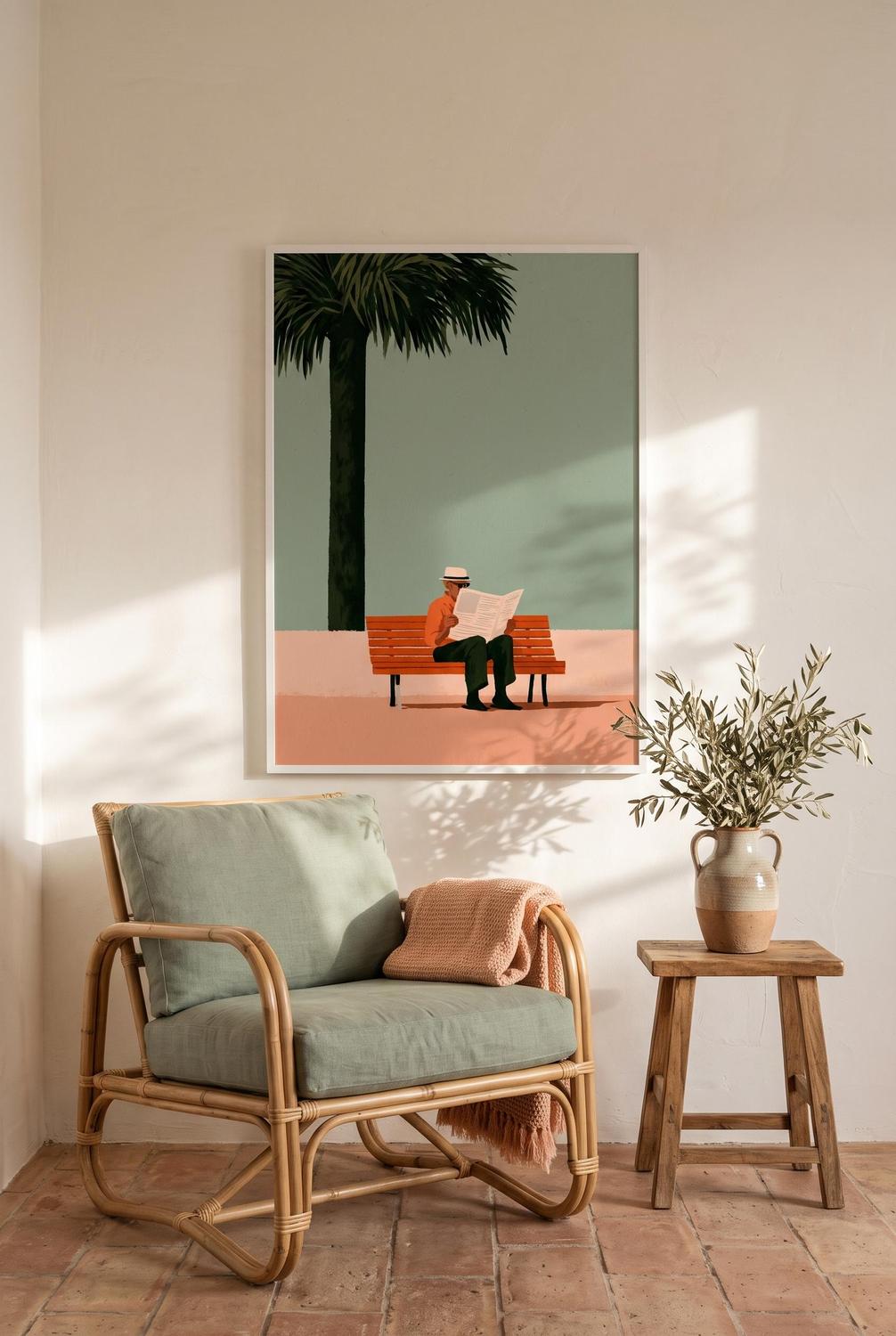
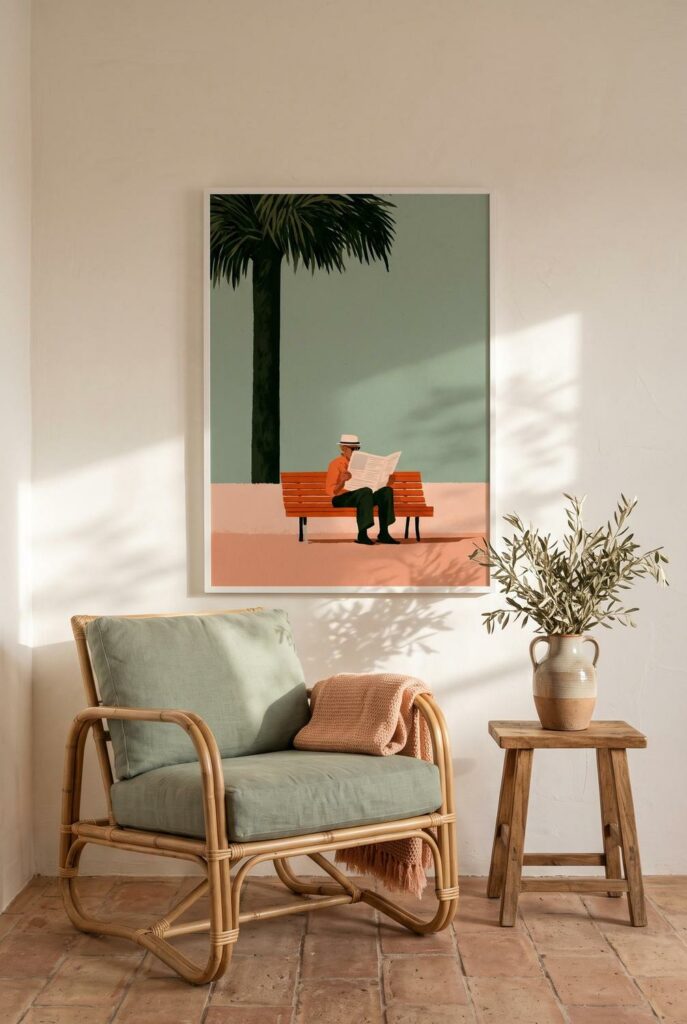
Choose calm colours for this wall, because the best sloped ceiling wall art never competes with the beams. A soft sage background, like the one in our palm tree wall art, opens the space and stays quiet next to exposed beams. Moreover, a single large piece of sloped ceiling wall art looks more intentional than three small ones scattered across a wall with awkward edges.
Sloped ceiling wall art for knee walls
Knee walls are the short vertical walls where the slope meets the floor. Most people ignore them, which is a mistake. They are perfect for low, wide compositions, because a landscape format follows the line of the roof. Also, a print that sits close to the floor feels cosy, not cramped.
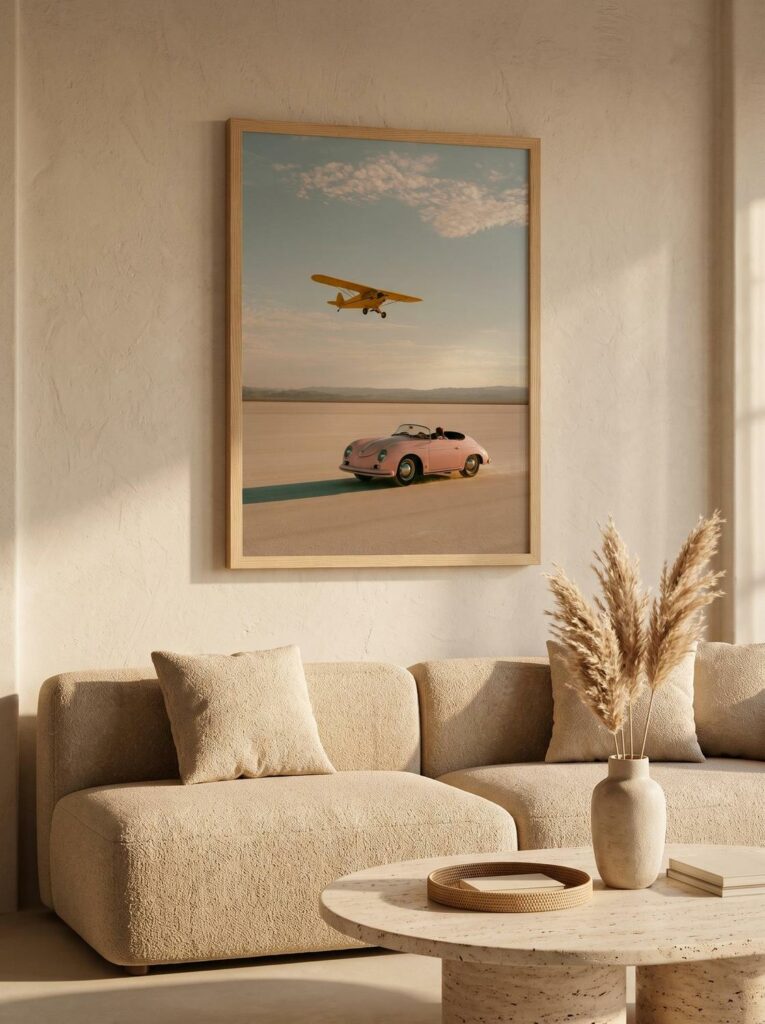
Lean a 40×50 or 50×70 cm framed print on a low dresser, a bench or a floor ledge. You do not need any hardware, and you can swap the print with the seasons. If the knee wall is short, choose a wide horizontal scene such as a desert road or a coastline, and let the empty sky do the work of making the room feel open.
Go vertical in dormers and gable windows
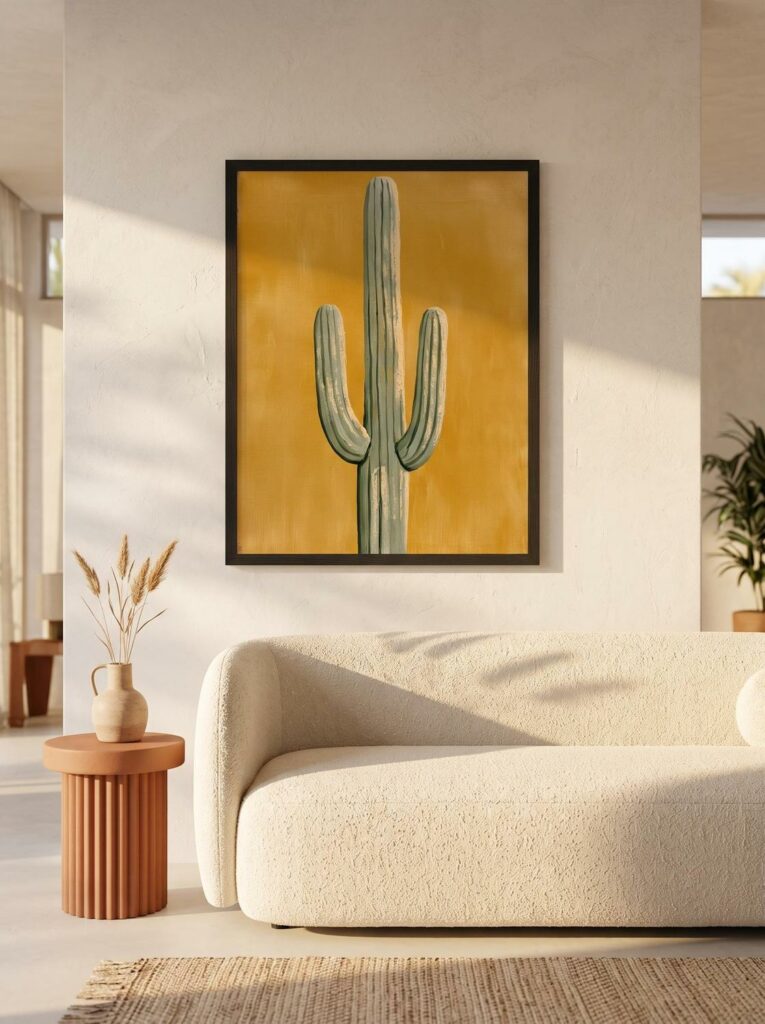
A dormer creates a small, deep niche, and it often has a bare wall on each side. Tall, narrow prints fit these spots better than anything wide. Hang one on each side of the window, or place a single print on the deepest side wall. In addition, keep the colours warm, because dormers get less direct light than the rest of the room.
A bold single object works well here. Our saguaro cactus print on a golden background is a good example. The warm yellow brightens a dim corner, while the tall cactus echoes the vertical lines of the window frame.
Should sloped ceiling wall art hang on the slope itself?
You can, but we recommend leaning or using a ledge first. A frame that hangs on an angled surface tilts forward, so it can look crooked and can catch on you as you move around. If you do want art on the slope, use a picture ledge or a small print at a safe height, and check the fixing with your landlord if you rent. For more ways to hang art without drilling, read our guide on how to hang art without nails.
Good sloped ceiling wall art starts with a tape measure, not a hammer. Weight matters on every surface too. Always match the hook or strip to the weight of the frame, and test it before you walk away. A framed print is usually heavier than a canvas, so a canvas can be an easier choice for a tricky wall.
Sloped ceiling wall art colours that lift an attic
Light, warm backgrounds make a low ceiling feel higher. Cream, sage, soft peach and pale terracotta all work. Dark prints can look wonderful in an attic bedroom, but then you want them on the tall wall only, with lighter pieces around them. Also, think about the light: north-facing attics suit warm yellows and reds, while sunny ones can handle cooler greens and blues.
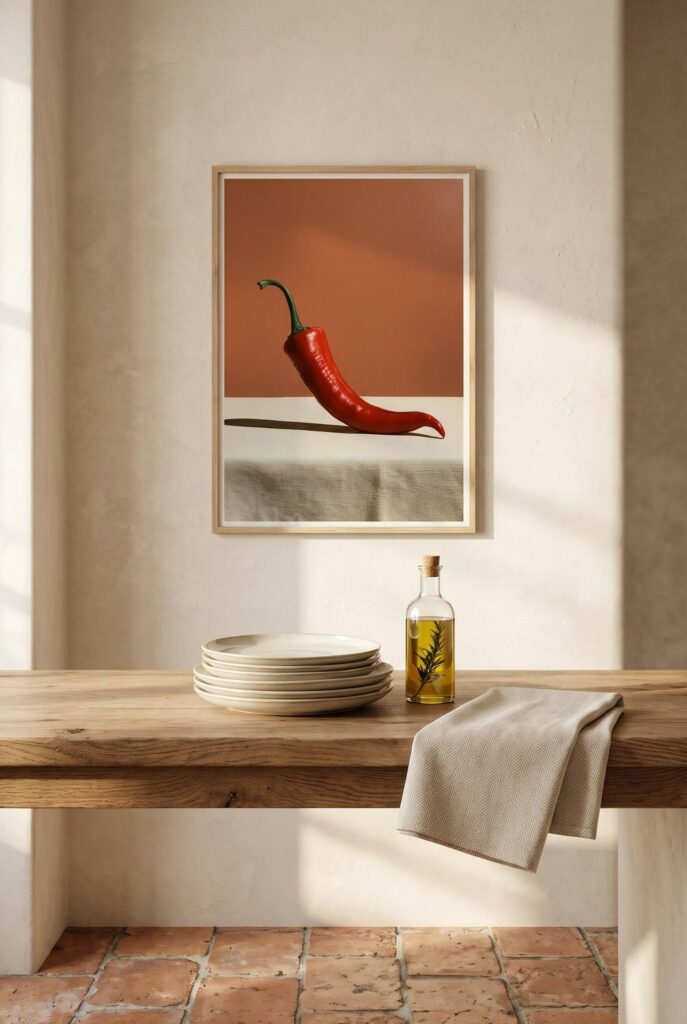
If you like earthy tones, our chili pepper wall art brings a strong terracotta red to a kitchenette or a dining corner under the eaves. It reads well from across the room, so it still works when you see it at an angle.
Which print for which attic room
Here is a short matching guide for the most common attic uses.
Attic bedroom: one large vertical piece over the headboard, in sage or cream, plus a small print leaning on a nightstand shelf. Home office: a calm landscape above the desk on the gable wall, such as a desert scene. Reading corner: a vertical print above an armchair, like The Morning Paper. Kids’ or guest room: a playful car or plane print, such as the Pink Speedster, leaning low on a dresser. Browse more ideas in our Mediterranean Mood collection or the kitchen prints.
Not sure about size? Start from the biggest empty wall and work down. Every print is made on demand, and the available sizes are listed on each product page. Delivery is free over €150. For a deeper look at attics as living spaces, see the general overview of the attic.
Frequently asked questions
What size sloped ceiling wall art works best?
On the tallest wall, 50×70 or 70×100 cm. On knee walls and in dormers, 30×40 or 40×50 cm. Keep at least a hand’s width between the frame and the slope.
Can I hang a picture directly on a sloped ceiling?
It is possible, but frames tilt forward on an angle. We suggest a picture ledge or leaning the print instead, and checking the fixing and the weight before you hang anything.
Which colours make an attic feel bigger?
Cream, sage, soft peach and pale terracotta open the space. Use darker prints only on the tallest wall, with lighter pieces around them.
Is a canvas or a framed print better for an attic?
Both work. A framed print looks finished and stays flat, while a canvas is lighter and easier on awkward walls. See our guide on matte vs canvas to compare.
Read also
Guest Room Wall Art: Make Them Want to Stay · Wall Art for Tall Walls and Double-Height Spaces · How to Hang Art Without Nails: 5 Renter-Friendly Methods
More prints to explore: