
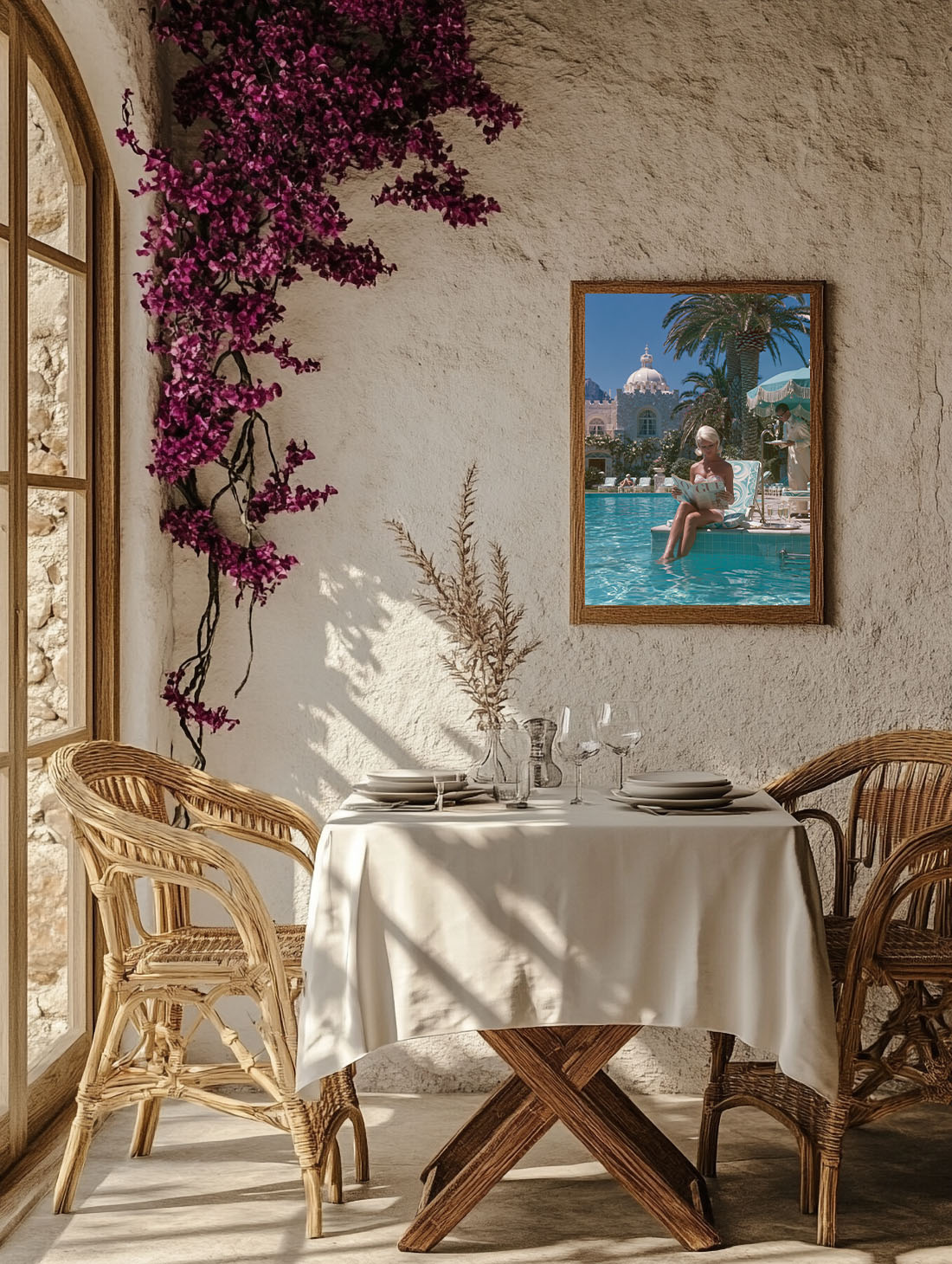
Bathroom wall art is the one design decision most people skip entirely — and it’s the one that shows. Walk into a well-designed bathroom and something feels intentional, considered, elevated. Walk into one without art and it feels like a hotel room mid-renovation. The bathroom isn’t a secondary space. In a villa, a well-appointed apartment, or anywhere you’ve invested in quality materials, the walls deserve the same attention as every other room.
This guide covers everything: what works in a bathroom, what doesn’t, how to choose the right print, and why the right piece can make this small space one of the most striking in your home.
Why Bathrooms Get Ignored — and Why That’s a Mistake
The bathroom gets skipped for a predictable reason: it feels like a functional space. Tiles, fixtures, storage — everything has a job. Art, in this logic, is an afterthought.
But consider how much time is actually spent in a bathroom. Morning routines, evening wind-downs, guests visiting for the first time. It’s a space that gets seen, often in quiet moments of attention. A bare wall in this context isn’t neutral — it registers as unfinished.
The better way to think about it: the bathroom is exactly the kind of room where one well-chosen piece makes an outsized impact precisely because the space is small. A single print above the bath, a framed botanical beside the mirror, a narrow vertical piece between the window and the door — any of these can transform a room that previously had no identity into one that feels curated.
What Makes a Great Bathroom Print
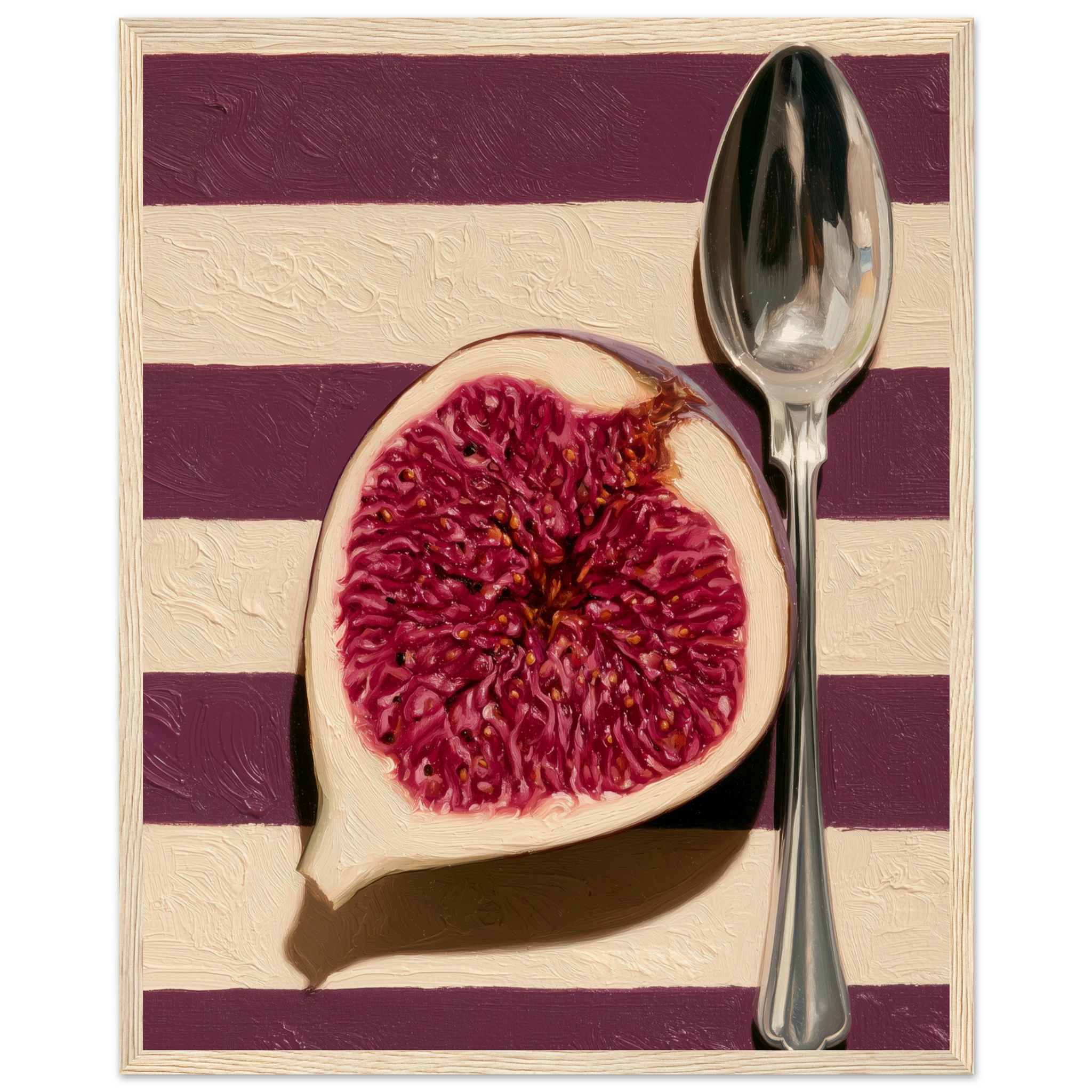
Not every print belongs in a bathroom, and the distinction matters before you start browsing.
Subject matter that works: Botanicals, abstracts, coastal and Mediterranean scenes, minimalist figure studies, architectural details, still lifes with a quiet elegance. These subjects hold up in the particular light of a bathroom — often natural light mixed with warm artificial light — and they don’t demand narrative the way more complex pieces might.
Subject matter that clashes: Heavily narrative works, dark portraits, busy compositions with multiple focal points. The bathroom is a space for calm. Art that asks too much of the viewer creates an odd tension in a room where the goal is ease.
Colour: Bathrooms often feature neutral backdrops — white, stone, warm grey. Art that works within this palette, or introduces a single confident colour, tends to land better than pieces with too many competing tones. A botanical print in terracotta against white tiles is one of the most reliable combinations in interior design for a reason.
The Best Art Styles for a Bathroom
Botanical Prints
Botanical prints are the single most effective category for bathroom wall art — and not by a small margin. They work because they echo the organic quality of a space that deals in water, light, and natural materials. A pressed fern study, a loose watercolour of Mediterranean flora, or a structured botanical illustration all bring something alive into the room without demanding attention.
Prints that work here: the White Hat Infinity Pool Framed Print, the Zoé — Pool Sunglasses Framed Print and the Marbella Pool Framed Print — each available as a framed print, ready to hang. Browse the Mediterranean Mood collection for more.
For a bathroom with marble or stone surfaces, a botanical print in ink or soft watercolour adds warmth without competing. For a bathroom with warmer, earthier tones, a print with more graphic weight — deeper greens, graphic lines — provides contrast.
Mediterranean and Coastal Art
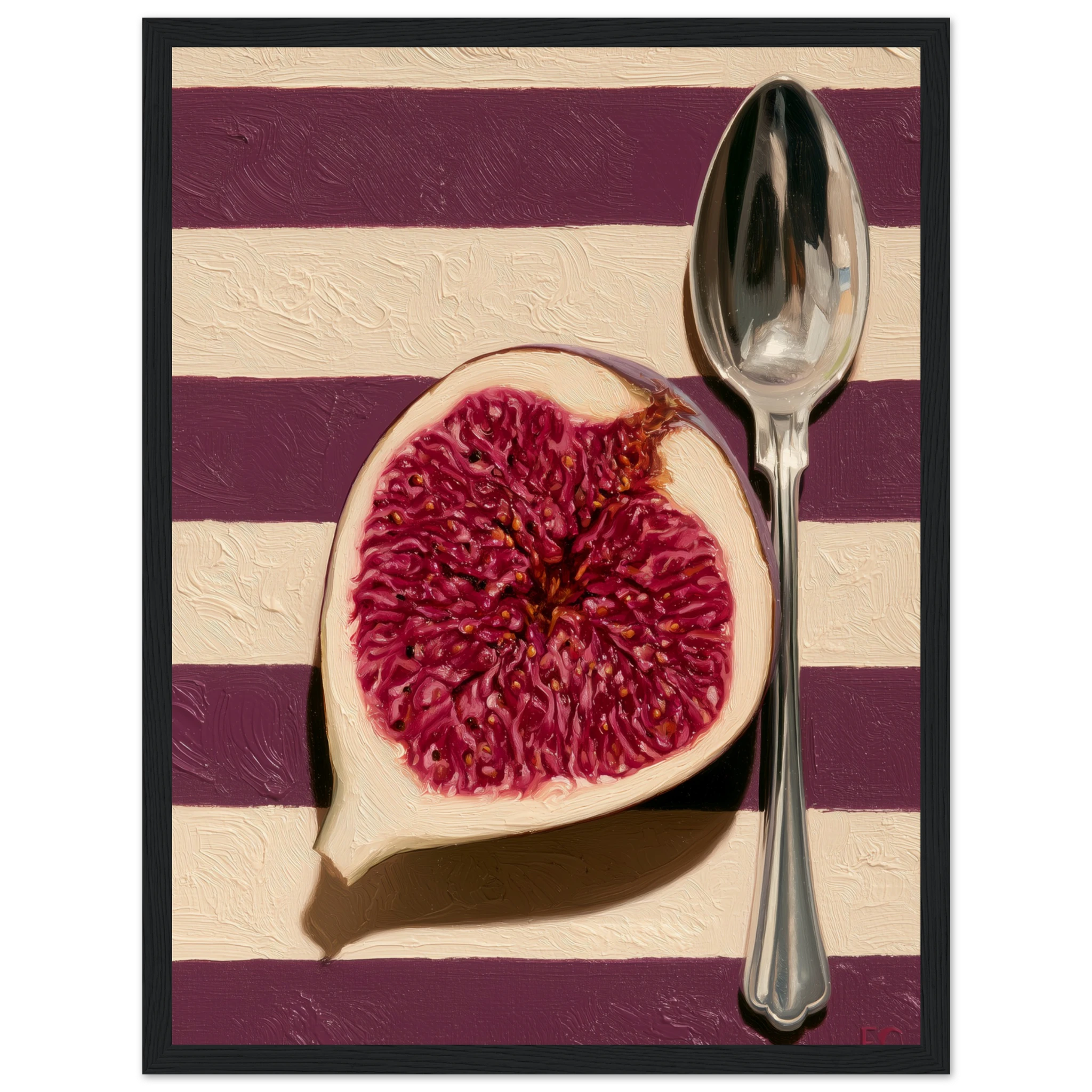
A coastal or Mediterranean print in a bathroom is less a design cliché than it appears at first glance. When done well — a quiet view of a harbour, an abstract interpretation of sea and light, a photograph with deliberate restraint — it creates genuine atmosphere. The bathroom becomes somewhere rather than just something.
Abstract Prints
Abstraction in a bathroom has a particular advantage: it doesn’t date. A well-chosen abstract — whether geometric, organic, or somewhere between — reads as timeless. It also navigates the subject-matter problem neatly: there’s no narrative to feel incongruous with the space, just colour, form, and the relationship between them.
Soft, minimal abstracts with muted palettes are the most reliable choice. Bolder, more graphic abstracts work best in bathrooms with clean, modern lines where the art can be the focal point.
Monochrome and Fine Art Prints
Black and white photography, line drawings, and fine art prints bring a particular kind of seriousness to a bathroom. Against white or pale grey walls, a single strong monochrome piece reads as a deliberate curatorial choice. It signals that this room was thought about.
Size, Placement and Proportion
Bathroom walls are often smaller and more interrupted than walls in other rooms — doors, windows, mirrors, and fixtures all compete for space. This makes proportion more important, not less.
Above the toilet: A classic placement. One medium-format piece (40×50cm or 50×70cm) centred above at eye height works well. A pair of smaller pieces side by side — both the same size, same frame — also works. Avoid going too large here; the space has a natural ceiling in terms of visual weight.
Beside or opposite the mirror: A print placed beside the mirror rather than behind it allows you to see both independently. A tall, narrow format — 30×90cm or similar — works particularly well here, giving the eye somewhere to travel in a typically vertical space.
Above the bath: If the area is well-ventilated and the print is at a safe distance from direct water contact, above the bath is one of the most impactful placements in the room. A wider, horizontal piece or a pair of botanical prints here transforms the bathing experience into something closer to a spa.
The small bathroom: In a bathroom with limited wall space, one well-chosen piece is always better than several competing for attention. Go for quality over quantity. A single striking print in a good frame does more than a grid of small mismatched pieces.
Humidity and Print Materials: What You Need to Know
This is the practical dimension most guides skip and most buyers regret ignoring. Bathrooms have moisture — some more than others — and not all prints handle it equally.
Fine art matte prints are the most common format and work well in most bathrooms provided the print isn’t directly above a shower or bath with no ventilation. The key is the frame: a well-sealed frame with a backing board prevents moisture from reaching the print from behind.
Framing matters: A frame with UV-resistant glass or acrylic front and a sealed back adds significant protection. If your bathroom has good ventilation — a window or extractor fan — a standard framed print will be fine in most placements.
What to avoid: Direct exposure to steam, splash zones, or poorly ventilated small rooms without any window. In these cases, prints behind glass with sealed frames are essential, or you need to consider placement more carefully.
The practical rule: If the wall you’re considering stays dry after a shower, a quality framed print will last. If it routinely gets damp, move the print to a different wall.
Explore our art for bathroom collection — printed to archival standards and available in a range of sizes suited to bathroom placement.
The Atelier Marbella Approach to Bathroom Art
At Atelier Marbella, bathroom art is treated with the same consideration as any other space. The prints in our collection that work particularly well in bathrooms tend to share a few characteristics: a restraint in composition, a palette that works with natural materials, and a subject matter that holds up in a space of quiet attention.
Our botanical series, Mediterranean landscapes, and abstract editions are consistently chosen by interior designers working on bathroom projects — from compact urban bathrooms to larger spa-style spaces in villas and country houses.
For a neutral, minimal bathroom: a botanical print in muted greens and terracotta, 40×50cm or 50×70cm, in a natural oak or black frame. For a warmer, more eclectic bathroom: a Mediterranean coastal scene or an abstract with warm sandy tones, slightly larger to hold the space. For a bold, design-forward bathroom: a graphic monochrome piece or a strong abstract — let the art do the work.
FAQ
Is bathroom wall art a good idea?
Yes — and it’s one of the most cost-effective ways to elevate a bathroom. A single well-chosen print transforms a space that’s often overlooked into one that feels intentional and designed.
What kind of art is best for a bathroom?
Botanicals, abstracts, coastal and Mediterranean prints, and monochrome photography all work well. The key is choosing a subject and palette that complements the calm nature of the space rather than competing with it.
Can I put a regular print in a bathroom?
Yes, in most cases. A quality matte print in a sealed frame performs well in bathrooms with normal ventilation. Avoid placing prints directly above showers or in rooms with persistent high humidity.
What size should bathroom wall art be?
For most bathrooms, 40×50cm or 50×70cm works well above a toilet or on a medium wall. A narrower, vertical format (30×90cm) suits spaces beside mirrors or between fixtures. In larger bathrooms or above a bath, a wider horizontal piece or a pair of prints works well.
How high should I hang bathroom wall art?
Centre the piece at approximately eye level — around 145–150cm from floor to centre of the print. Above the toilet, hang it roughly 20–25cm above the cistern. The goal is for the art to feel part of the room, not floating near the ceiling.