
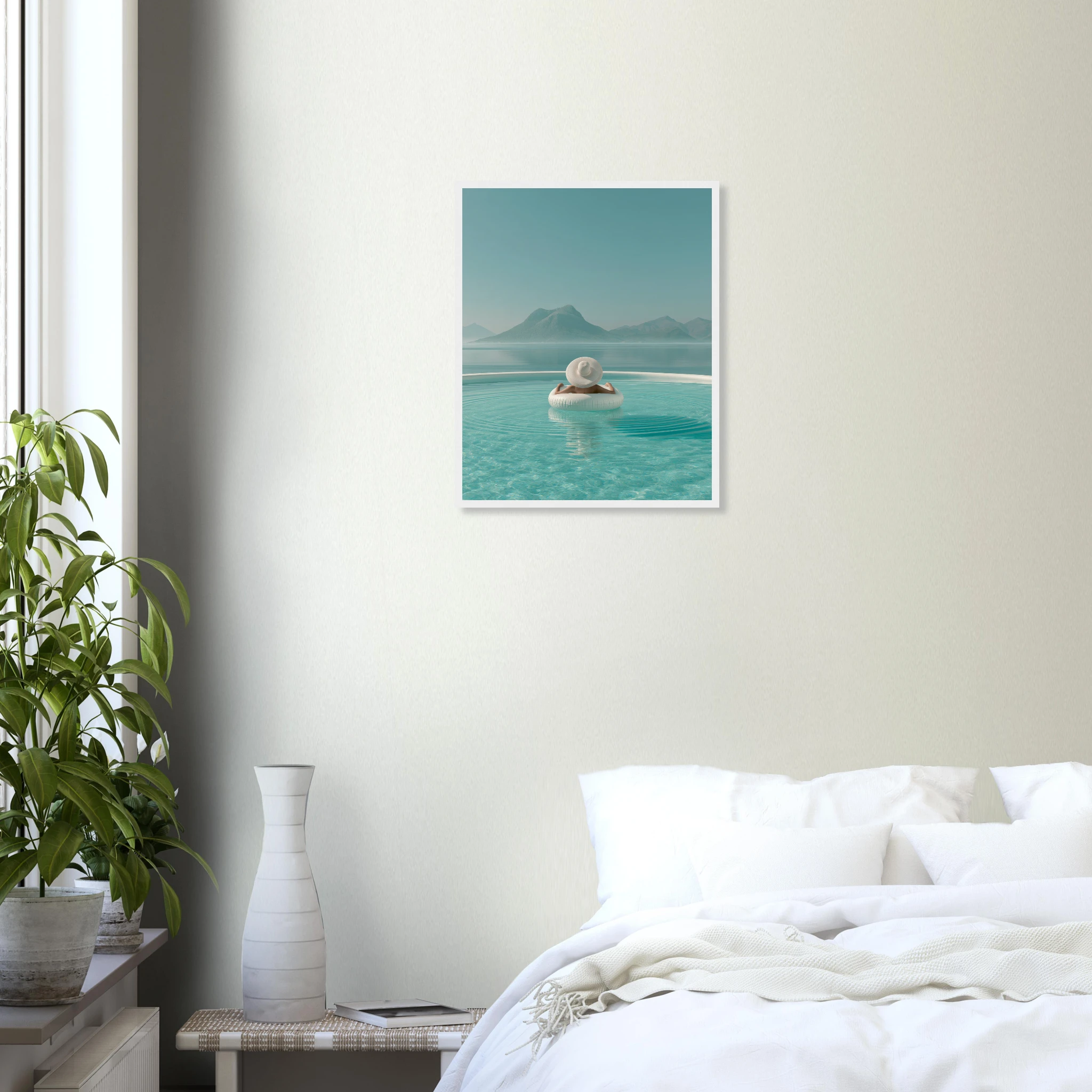
Entryway wall art is the first thing a guest sees and the last thing you see before you leave — which makes it the most-viewed art in the house, and usually the least considered. Most entryways get whatever was left over. The good ones get a single, deliberate piece that sets the tone for everything behind it.
This guide is about the entryway specifically: the console wall, the wall facing the front door, the narrow strip beside it. It is not about hallways — for the long corridor, read our hallway wall art guide. Here we deal with the threshold.
What the Entryway Has to Do
An entryway has one job in decorating terms: to say, in about two seconds, what kind of home this is. Calm or bold. Warm or cool. Mediterranean or Scandinavian. The art carries most of that message because it is the only thing on the wall at eye height when someone walks in.
That means the entryway print should be the most you piece you own — not the safest. A neutral abstract in the entryway is a missed opportunity. A vintage Fiat on the Amalfi coast, a peacock in Prussian blue, a woman in a white hat by a pool — these tell a story before anyone has taken their shoes off.
The Console Wall: The Classic Entryway Layout
Most entryways are built around a console table against one wall, with the art above it. The proportions are simple to get right:
Width: the print (or the group) should be roughly two-thirds the width of the console. A 120 cm console wants a 70×100 cm print hung portrait, or a 100×140 cm hung landscape. Anything under 50 cm wide looks lost.
Height: bottom edge of the frame 15–25 cm above the console top. The centre of the print should land at about 145–155 cm from the floor — slightly lower than gallery height, because people see it while walking, not standing still.
What goes on the console: keep it to two or three objects — a lamp, a bowl, a stack of books. The art is the focal point; the console is its plinth.
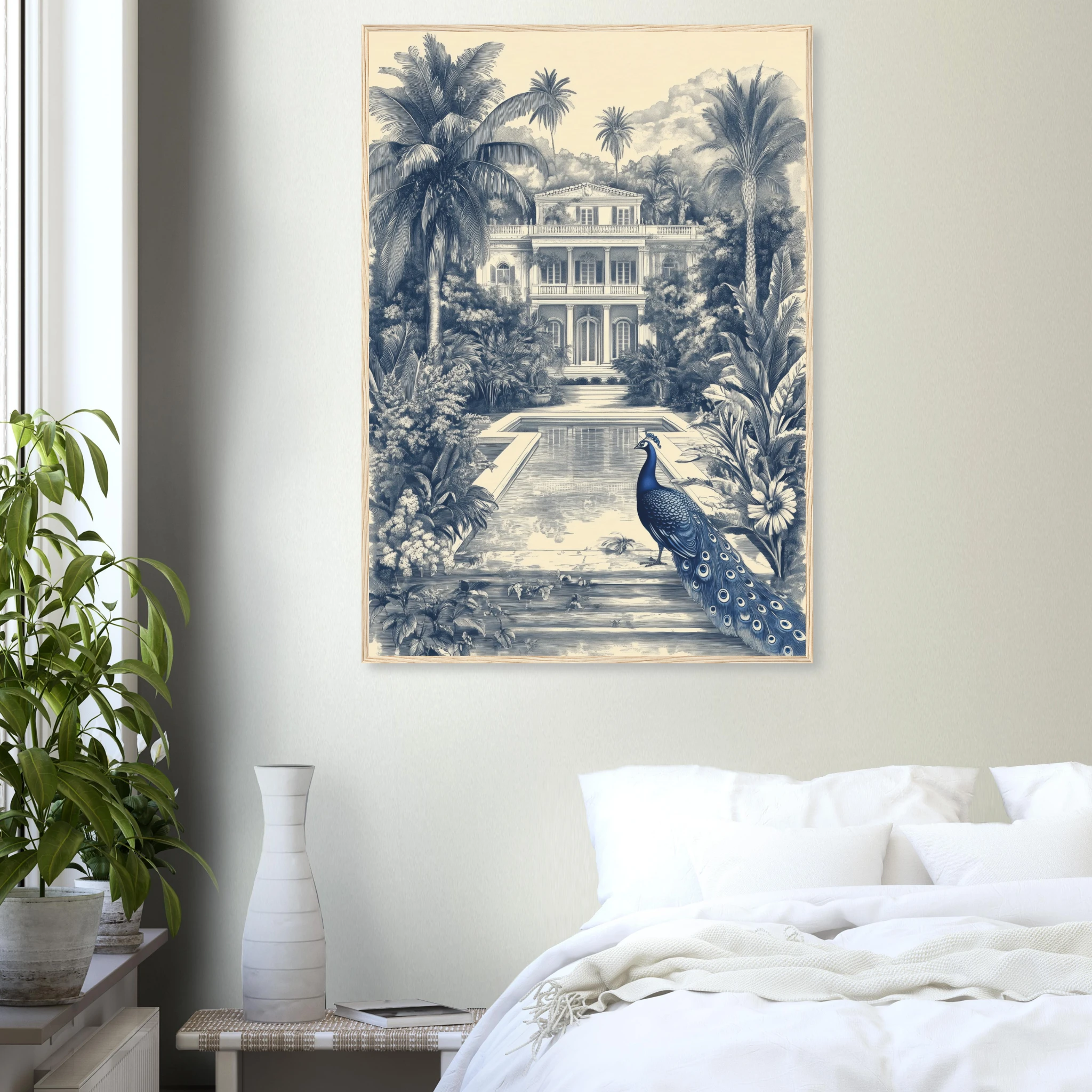
A single graphic print in one colour, like the Toile de Marbella Peacock Framed Print, is the classic console-wall move: Prussian blue on ivory reads from the door, holds up under a lamp, and doesn’t argue with keys, coats and umbrellas.
Portrait, Not Landscape
Entryways are almost always taller than they are wide, and the wall above a console is usually a vertical rectangle. A portrait print echoes that shape and makes a small entry feel taller. Landscape prints, unless very large, make the wall look wider and lower — the opposite of what most entrances need.
If the wall is genuinely wide (a double-door entrance, an open-plan foyer), a landscape 100×140 cm works. Otherwise, default to portrait and go one size bigger than feels comfortable.
Colour: Warm Beats Cool at the Door
The entryway is often the darkest room in the house — one door, rarely a window. Cool, muted prints go grey in that light. Warm and saturated colours do the opposite: they act like a lamp.
Mediterranean palettes are made for this. Terracotta, lemon yellow, bougainvillea, sea blue with a lot of sun in it. A single warm print in a dim entryway changes the perceived light level of the whole space.
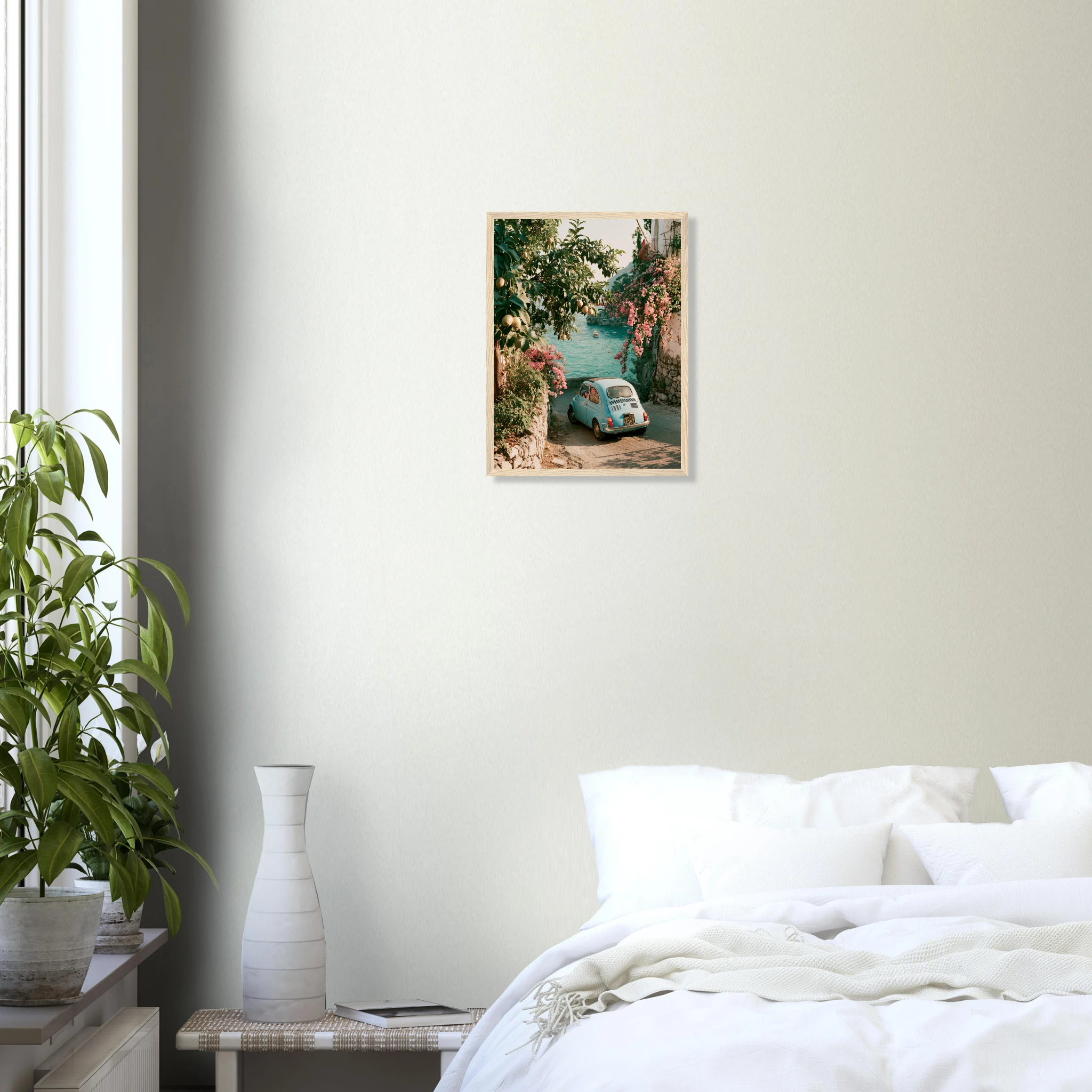
The Fiat 500 Amalfi Framed Print is the kind of piece that makes a dark entrance feel like it has a window: pastel car, white buildings, blue sea — and a subject that makes guests smile before they’ve said hello.
The Wall Facing the Front Door
If the wall you see first is straight ahead rather than to the side, the rules tighten. This wall is seen head-on from the doorstep, at a distance, often framed by the door itself. It wants one piece only, hung dead centre, large enough to read from outside.
This is the spot for your best print. Not a pair, not a gallery, not a mirror — one image with a clear subject and strong colour. 70×100 cm minimum; 100×140 cm if the wall is more than three metres from the door.
Prints with a single figure or object work best here: one car, one animal, one person. The eye lands on it immediately and the entrance feels composed.
Small Entryways and Narrow Walls
In an apartment entry with 80 cm of wall beside the door, the temptation is to hang something small. Don’t. A 40×50 cm print on a narrow wall still looks like an afterthought; a 50×70 cm print that nearly fills the wall looks deliberate.
Alternatively, lean a large framed print on the floor against the wall (70×100 cm or bigger) — it takes zero wall space, reads as confident, and can move when you rearrange.
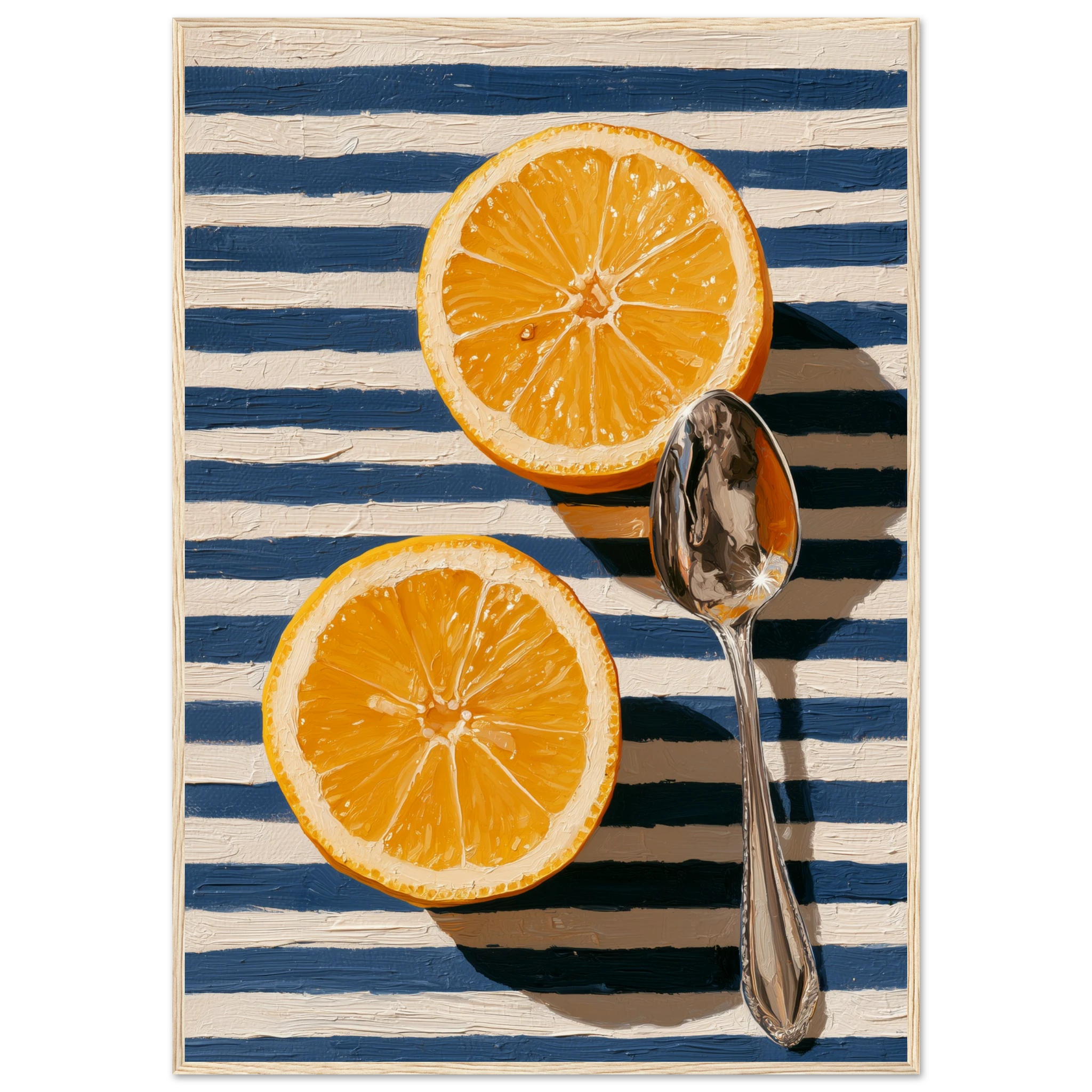
A tight, bright composition like Lemons on Marin is ideal for a narrow entry wall — the yellow carries light into the space and the still-life format doesn’t need distance to be read.
Practical Notes for the Entrance
Frame it. The entryway is a high-traffic zone: coats brush the wall, doors slam, bags get dropped. A framed print survives it; a loose poster doesn’t. Our framed prints arrive ready to hang with matte, non-glare paper — no reflections from the door light.
Mirror plus art: if you need a mirror by the door, put the mirror on the side wall and the art on the console wall. Mirror above the console is practical but wastes the best wall in the room.
Hang it securely. Two hooks, not one — a slammed door will tilt a single-hook frame within a week.
For pieces that set a Mediterranean tone from the doorstep, browse the Mediterranean Mood collection.
Read Also
→ Hallway Wall Art: First Impressions Matter
→ Staircase Wall Art
→ Art Print Sizes: How to Choose the Right Format
FAQ — Entryway Wall Art
What kind of art is best for an entryway?
One deliberate, characterful piece with warm colour and a clear subject — something that says what kind of home this is in two seconds. Portrait format suits most entryways. Avoid small, neutral or busy prints; the entrance is the place to be specific.
How big should art be above an entryway console?
About two-thirds the width of the console. For a 120 cm console, a 70×100 cm portrait print or a 100×140 cm landscape. Hang the bottom edge 15–25 cm above the console top.
What is the difference between entryway and hallway wall art?
The entryway is the threshold — the console wall and the wall facing the door, seen at a glance on arrival. It wants one strong piece. A hallway is a corridor seen in motion, which suits a series or a run of frames. See our separate hallway guide for that.
Should I hang a mirror or art in the entryway?
Both, if there is room: mirror on the side wall, art on the console wall or the wall facing the door. If you have to choose one wall, give the best wall to the art — a mirror reflects the space, a print defines it.
Preparing a spare room as well? See our guide to Guest Room Wall Art.