Giraffe, leopard, peacock — animal print wall art is having a serious moment in interior design. Not because it’s loud, but because, handled right, it brings something no abstract print can: a sense of the wild, distilled into something beautiful. And in Mediterranean interiors shaped by sunlight and natural materials, animal art has always felt at home.
In This Article
- Why Animal Prints Work Beyond the Expected
- Choosing by Animal: Giraffe, Peacock, Leopard
- Scale and Composition: Where Most People Go Wrong
- How to Pair Animal Print Art with Your Interior
- Animal Print Wall Art by Aesthetic
- FAQ
Why Animal Prints Work Beyond the Expected
The instinct to decorate with animal imagery is older than design itself — it’s in cave paintings, in tapestries, in Victorian naturalist prints. What’s changed is the context. Today’s best animal print wall art isn’t decorative in an ornamental sense. It’s dramatic in a design sense: a single image that brings texture, depth, and narrative to a space that might otherwise feel composed but lifeless.
The key distinction is between animal-themed art and animal art as design. A photographic print of a giraffe against a stormy sky isn’t a safari souvenir — it’s a study in line, scale, and tonal contrast that happens to feature an animal. The subject is almost incidental. What you’re hanging is geometry, mood, and the specific quality of light that a great photographer finds in a wild subject.
This reframing matters because it opens the door to rooms and aesthetics that you might not associate with the genre. Animal wall art works in a Marbella villa with whitewashed walls and rattan furniture. It works in a London apartment with concrete ceilings and steel shelving. The subject travels. The question is always how, not whether.
Choosing by Animal: Giraffe, Peacock, Leopard
Different animals carry different visual and emotional registers, and the choice of subject should be informed by what you want the image to do in the room.
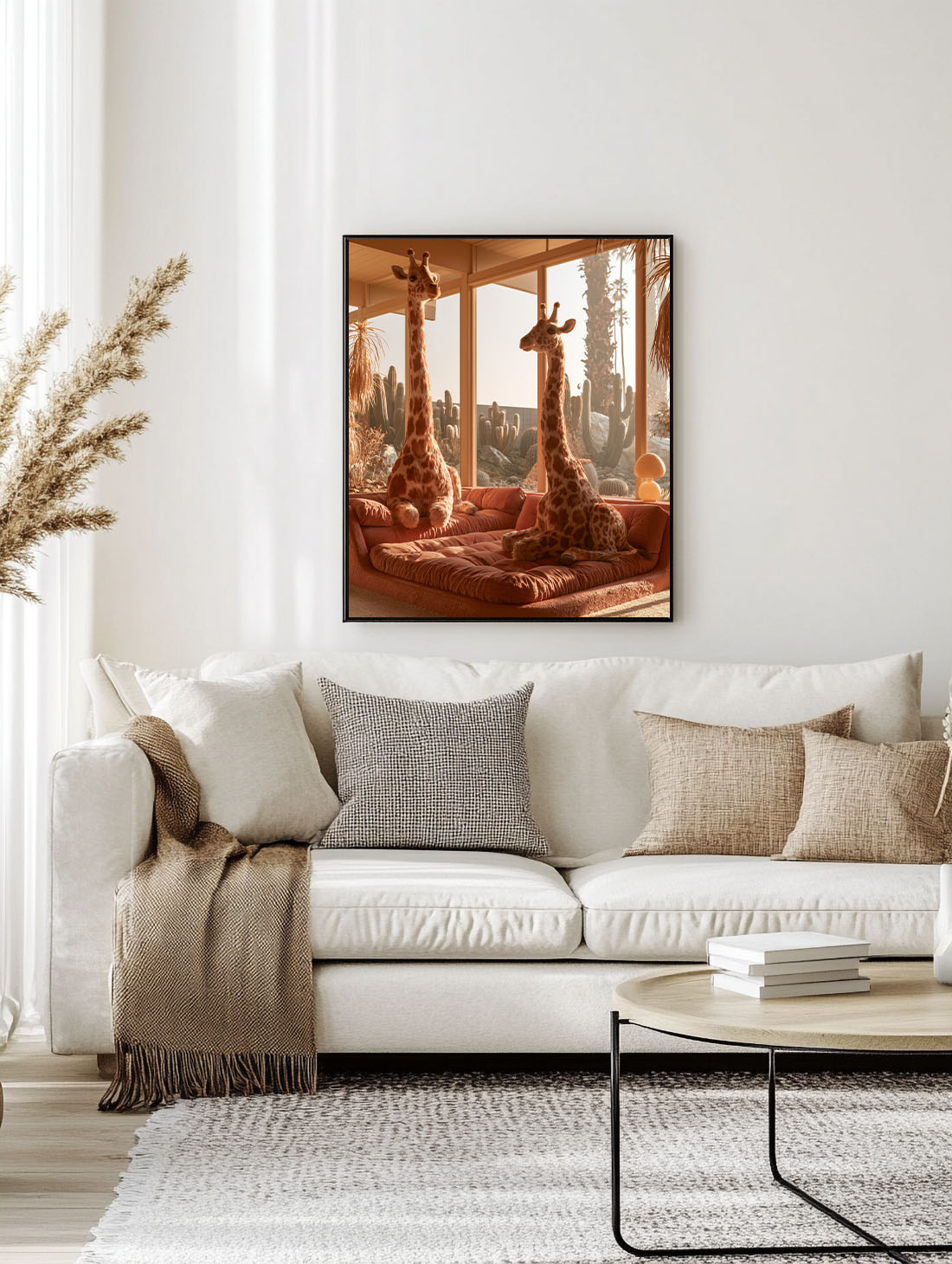
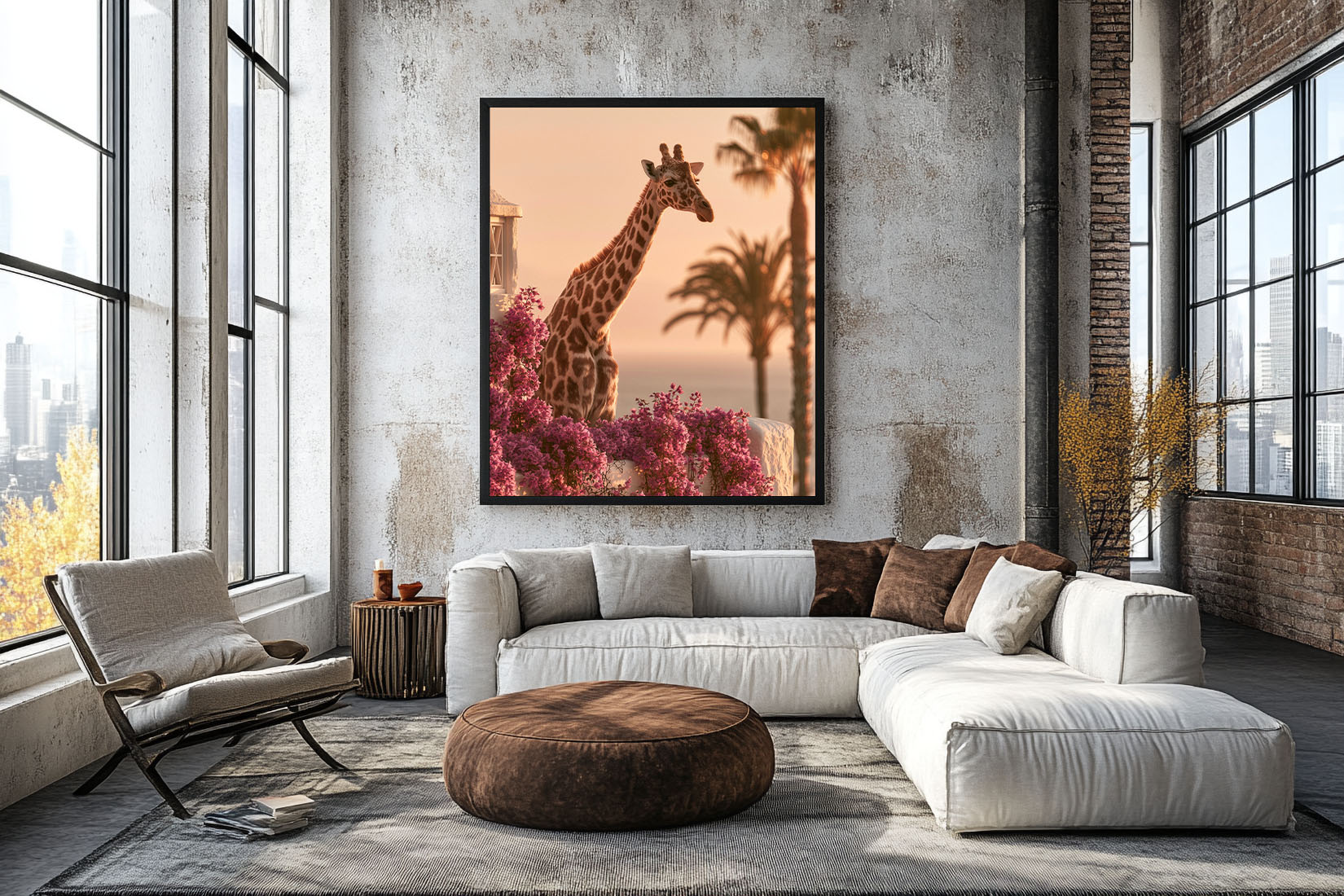
The giraffe is among the most architecturally compelling of animal subjects. Its height, its neck’s impossible curve, the graphic quality of its coat pattern — these make giraffe wall art particularly strong in tall spaces, or on walls where you want a sense of upward movement. A single giraffe photograph in a double-height hallway or a room with high ceilings achieves something close to sculptural presence.
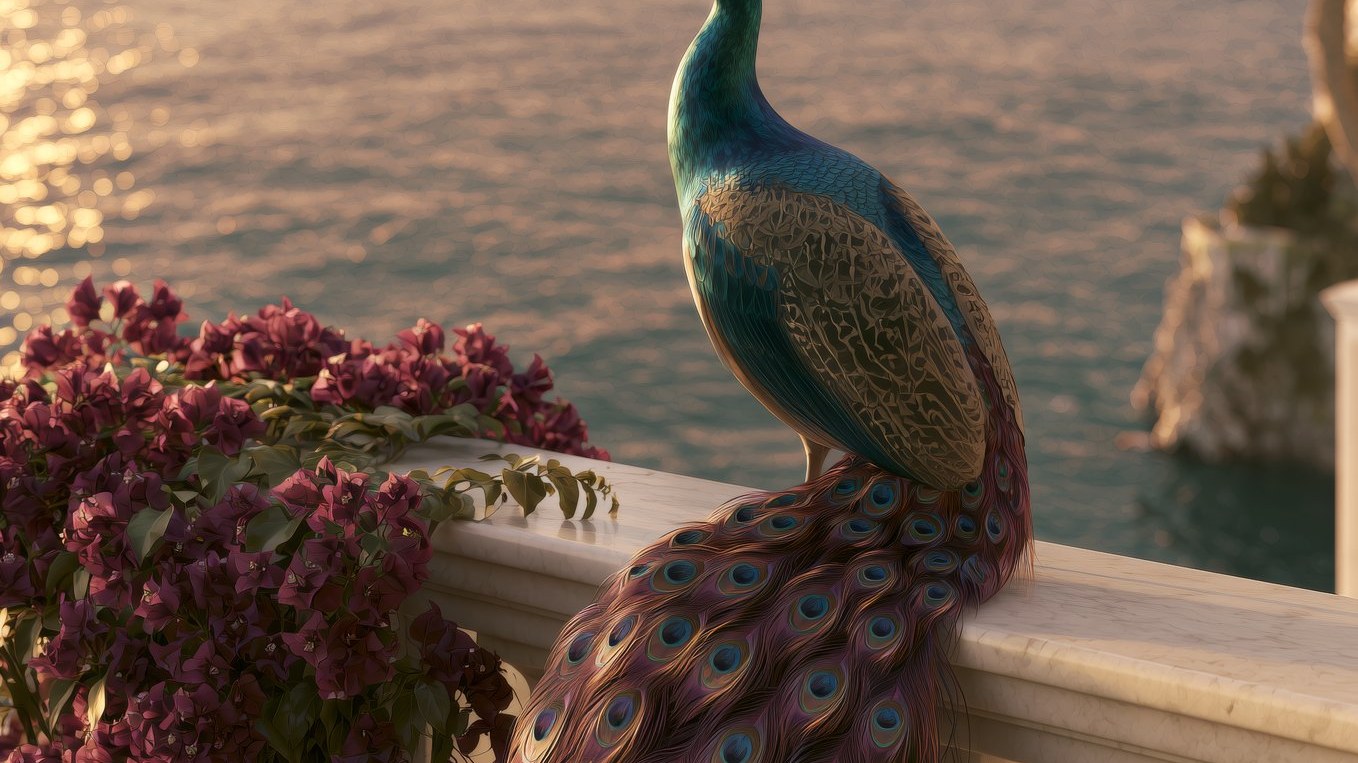
The peacock is pure drama — feathers as baroque architecture, color as theatre. A peacock print works best as a statement piece in a room that’s otherwise restrained: one strong image against white or off-white, nothing competing for attention. It’s the rare animal subject that benefits from large format — at 60×80 cm or larger, the feather detail becomes a world of its own.
The leopard offers something different: raw energy held in a compact, graphic form. The spotted coat is itself a pattern — abstract, almost geometric. A leopard print works in rooms where you want tension and vitality rather than grandeur. In a bedroom or reading room, a single leopard photograph adds a quality that floral or abstract art rarely achieves: the sense that something alive has been caught in a perfect moment.
Scale and Composition: Where Most People Go Wrong
The most common mistake with animal wall art isn’t choosing the wrong animal — it’s choosing the wrong size, or hanging a print too high. Both errors have the same effect: the art loses its power and becomes decorative in the pejorative sense of the word.
Animal subjects, particularly large ones (elephant, giraffe, big cats), need room to breathe. A giraffe print at 40×60 cm doesn’t have the presence the subject deserves — the scale undermines the subject. As a rule, go larger than your instinct suggests. A 80×120 cm or 100×150 cm giraffe print on a wall that initially seems “too small” for it will almost always prove more effective once hung.
Hang at eye level — not at the top of the wall. The center of the image should sit at approximately 145–150 cm from the floor in most residential settings. The persistent temptation to hang art too high is one of the most common decorating errors. Art hung too high creates visual tension that’s uncomfortable rather than dramatic.
How to Pair Animal Print Art with Your Interior
The golden rule for pairing animal art with a room: the print should feel like it belongs, not like it arrived from somewhere else entirely. This usually means finding at least one visual thread that connects the artwork to the existing palette or material language of the space.
Prints that work here: the Bougainvillea and Leopard Framed Print, the Yellow Porsche and Leopard Framed Print and the Zebra at the Pink Riad Framed Print — each available as a framed print, ready to hang. Browse the Animals collection for more.
For rooms with warm, earthy tones — terracotta, ochre, natural wood — a giraffe or leopard print in warm amber light ties the image to the room’s own color story. For cooler, more neutral spaces — greige walls, stone floors, aged linen — a peacock print in deep jewel tones provides the contrast the room needs without breaking its register.
Animal art pairs well with natural textures: rattan, woven baskets, raw ceramics, botanical prints. It can sit beside botanical wall art without competing, and alongside abstract photography without the combination feeling incongruous. What it doesn’t do well next to: very literal figurative work or busy pattern-on-pattern pairings. Give the animal image space — and let it be the most interesting thing in the room.
Animal Print Wall Art by Aesthetic
Different interior aesthetics call for different approaches to animal print wall art.
Mediterranean / coastal: peacock prints in rich greens and blues; giraffe in warm savanna light; any animal in golden hour tones that echo the light of the south. Keep frames simple — raw wood, brushed brass, or unframed on fine art paper.
Scandinavian / minimalist: black-and-white animal photography — a leopard in shadow, a giraffe in graphite tones. The monochrome palette integrates cleanly with light wood, white walls, and simple textiles without disrupting the room’s visual calm.
Contemporary / eclectic: more latitude here — a large-format peacock as a statement piece, a leopard print in an unexpected crop. The eclectic interior can absorb more visual energy, and animal art often works best when it’s given room to be the loudest voice in the room.
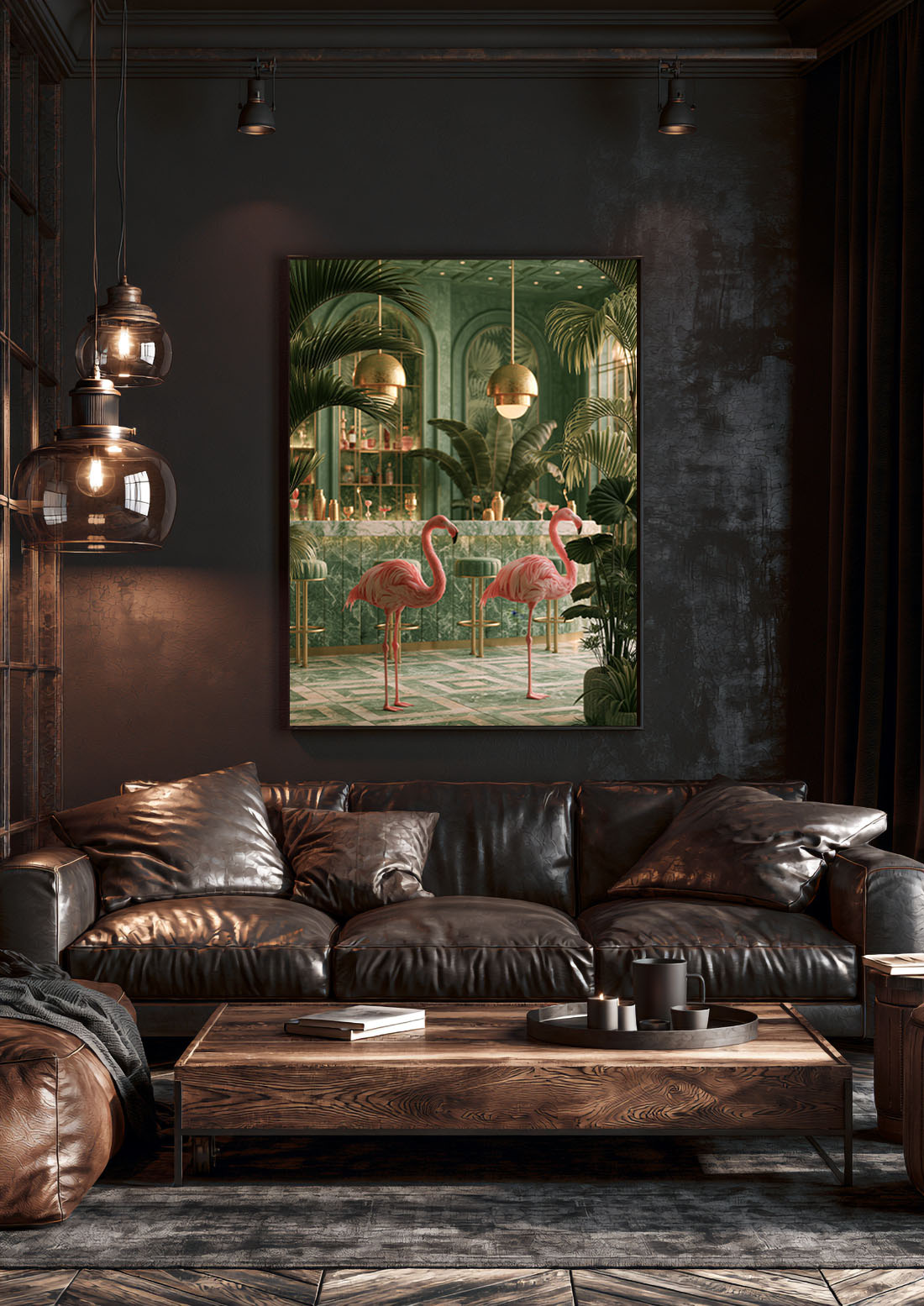
FAQ — Animal Print Wall Art
What is the most popular animal for wall art?
Leopards, lions, and peacocks consistently top the list for interior use, followed by giraffes and horses. Leopard and peacock prints tend to work across the widest range of interior styles — from minimal to maximalist. Giraffe art is particularly popular for rooms with high ceilings where the subject’s height can be fully appreciated.
Can animal print wall art work in a modern interior?
Absolutely — provided the photograph itself has a modern sensibility. Fine art animal photography with strong graphic composition, careful tonal control, and intentional framing integrates naturally into contemporary interiors. It’s illustrative or decorative animal imagery that tends to clash with modern spaces, not the subject matter itself.
What size should I choose for an animal print?
For large animal subjects (giraffe, elephant, big cats), always go larger than your instinct suggests — 80×120 cm at minimum for a main wall. For smaller animals or close-up detail shots, 60×80 cm can work as part of a curated grouping. The key is that the format should feel generous relative to the subject — undescaled animal art is always less effective than you’d hope.
How do I avoid animal wall art looking too themed?
Limit yourself to one or two animal prints per room, choose photography over illustration, keep the rest of the decor calm and the palette coherent, and hang the print as you would any fine art — at eye level, thoughtfully framed. The “safari lodge” effect comes from accumulation and from illustration-style art, not from a single well-chosen photograph.