
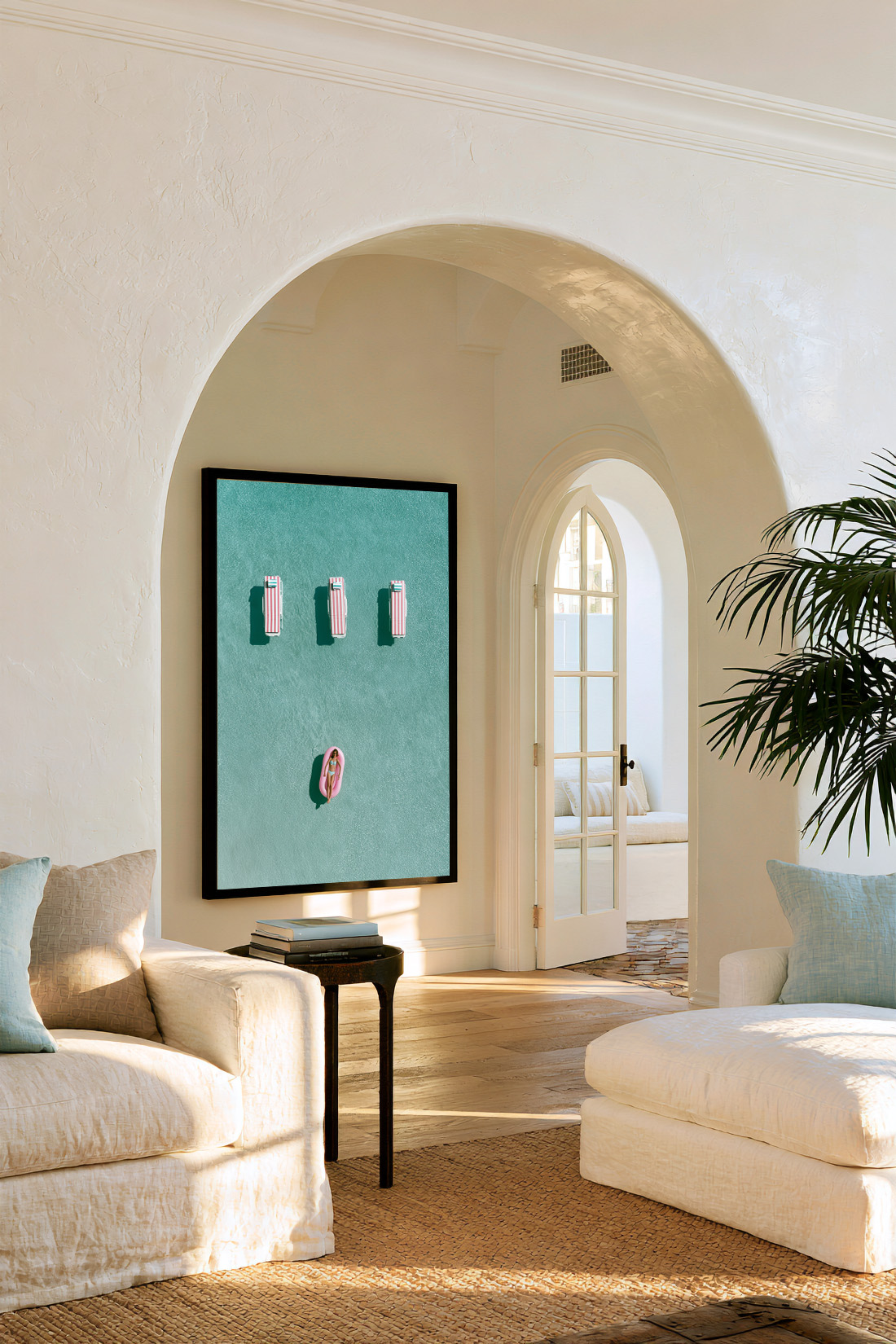
Dining room wall art is the most underestimated design decision in the home. The dining room is where people sit still long enough to actually look at what’s on the walls — which makes it the room where art has the most time to work on a person, and the most time to fail.
Most dining rooms either have nothing on the walls, or have something that shouldn’t be there. A generic print that came with the house. A mirror that adds space but says nothing. A clock. The result is a room that’s perfectly functional and completely forgettable. The fix is simpler than most people think: one strong print, correctly scaled, in the right place.
What Makes a Dining Room Different from Other Rooms
The dining room presents a specific brief that other rooms don’t. It’s a room experienced primarily seated — which means the wall opposite or adjacent to the table is seen from a fixed eye level, at a fixed distance, for extended periods of time. The print you choose will be studied, consciously or not, over the course of hundreds of meals.
This changes what works. Abstract prints that function as atmosphere from across a living room reveal their full composition at the dining table. Narrative prints — a Mediterranean landscape, an editorial photograph, an overhead pool — reward sustained looking. Empty or decoratively thin pieces become invisible faster.
Scale: The Most Common Mistake
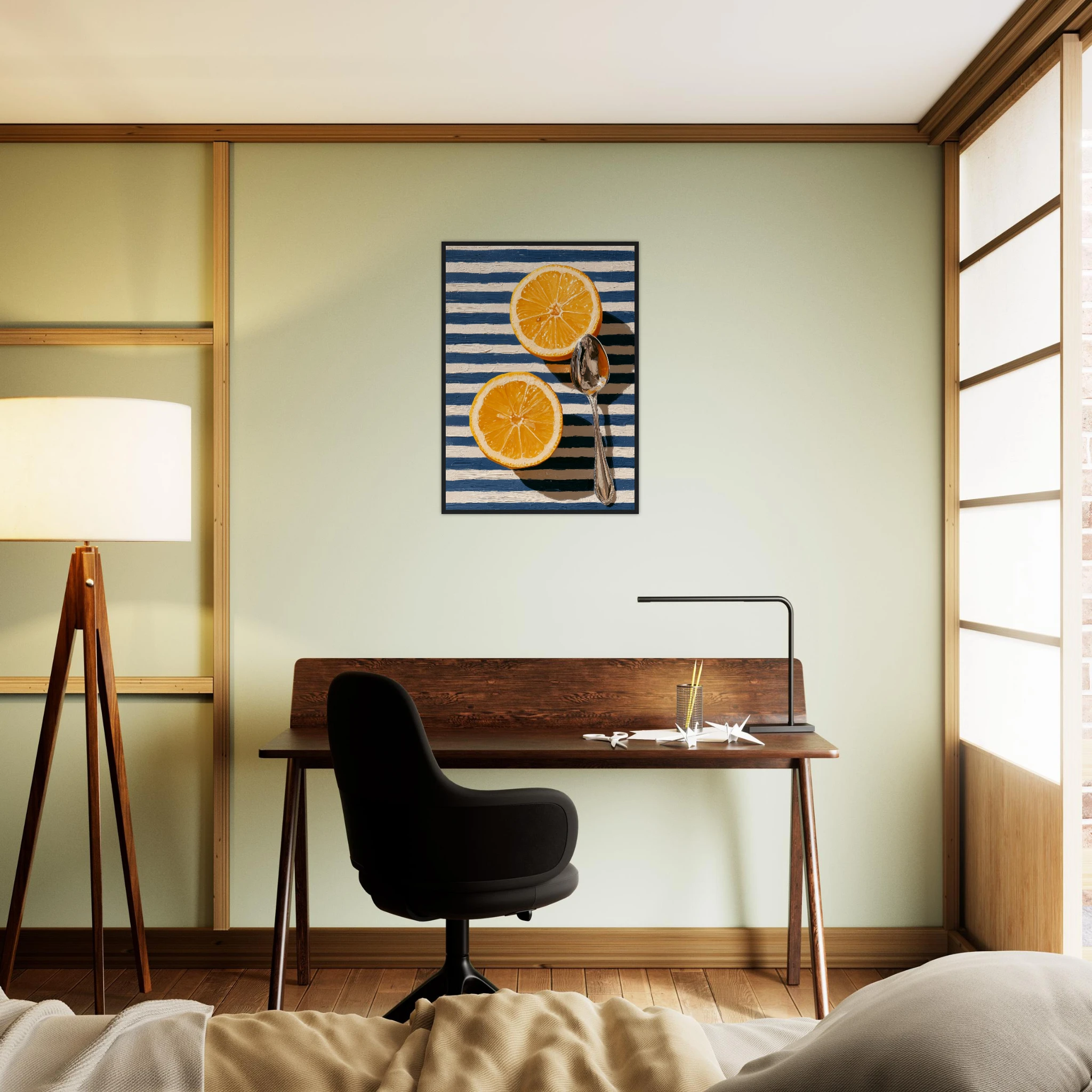
The single most common mistake in dining room art is going too small. A print that works on a bedroom sideboard disappears on a dining room wall. The dining room wall — particularly the wall at the end of the table or behind the head of the table — is a focal point that requires visual weight to function as one.
The minimum for a dining room statement piece is 70×100cm. For a room with ceilings above 2.7m, or a wall wider than 3m, 100×140cm is where the print earns its place. When in doubt, go larger. Art almost never fails by being too big in a dining room — it fails by being too small.
If a single large print feels like too much of a commitment, a diptych — two prints of the same series, hung with a narrow gap — achieves the same visual weight with more compositional flexibility. A horizontal pair of 50×70cm prints reads as a 100×70cm composition from across the room.
Subject and Mood: What Works in a Dining Room
The best dining room art connects to the act of eating, gathering, and the pleasures of a particular life — without being literal about it. You don’t need prints of food. You need prints that evoke the same world as a good meal: warmth, abundance, a specific place and time of day.
Mediterranean landscapes and architecture are the strongest category for dining rooms. The colour palette of the Mediterranean — terracotta, cobalt, ochre, bougainvillea pink — is precisely the palette of a room designed for pleasure and gathering. A villa pool, a coastal view, a sunlit courtyard: these images put a room at ease.
Aerial photography — pool views, beach club photographs, coastal aerials — works exceptionally well in dining rooms because the overhead perspective creates a print that can be read from many angles without losing its composition. It also tends toward bold, saturated colour that reads across a room.
Editorial lifestyle photography in the Slim Aarons tradition — people, places, a particular golden-hour light — gives a dining room a sense of occasion. The best of these prints don’t decorate a room, they elevate it.
What generally doesn’t work: very dark prints that absorb the room’s light; very minimal prints that disappear in the visual noise of a dining room in use; prints with aggressive energy that work against the purpose of the space.
Placement and Height
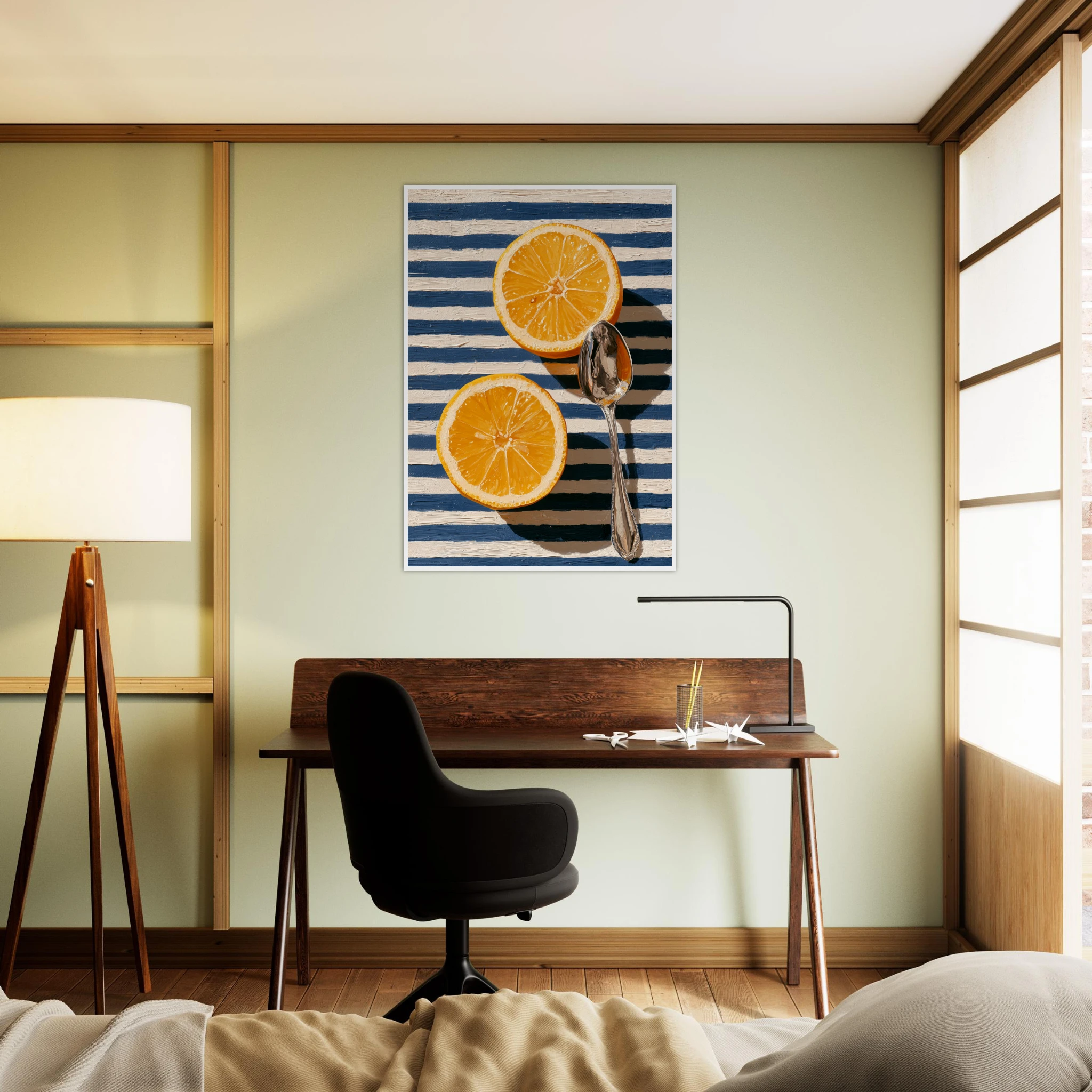
In a dining room, art placement is anchored to the table, not to standing eye level. The centre of a print hung on the wall adjacent to or opposite a dining table should sit at approximately seated eye level — around 120–130cm from the floor to the centre of the print. This is lower than the 145–150cm standard for living room art, and the difference matters.
The most effective placement is the wall at the short end of the table — the wall the person at the head faces, and that guests see as they take their seats. A single large print on this wall anchors the whole room from the moment you sit down.
Explore our Mediterranean Mood collection — prints designed for rooms built around warmth and gathering.
Framing for the Dining Room
The dining room is one of the few spaces where a slightly more substantial frame works. A slim wood frame in oak or walnut adds warmth that suits the convivial purpose of the space. Black frames suit more contemporary dining rooms with clean lines and dark accents.
Canvas without a frame is also effective in dining rooms, particularly for large-format prints. The gallery-wrap finish gives the print a presence that suits the scale of the room, and the textured surface adds depth that flat paper lacks in a high-light environment.
Three Pieces Worth Considering
Watermelon & Silver Spoon — a halved watermelon against bold red and white impasto stripes, a vintage silver spoon beside it. Graphic and immediate at scale. The composition reads clearly from across the table. Works in dining rooms with strong colour — white walls, dark furniture, terracotta tile.
La Concha — Marbella 1970s — a cinematic black and white scene from the Costa del Sol. A world to inhabit during a long dinner — specific place, specific time, atmosphere that doesn’t resolve quickly. Works in any dining room where warmth and storytelling matter.
Dachshunds Wine & Dine — two dachshunds at a candlelit table, wine in paw. Creates conversation without effort. Sophisticated enough to earn its place, playful enough to earn a reaction.
FAQ
What size art print for a dining room?
70×100cm is the working minimum for a statement piece in most dining rooms. For larger rooms or walls above 3m wide, 100×140cm is where a print truly commands the space. Go larger than you think you need.
Where should art hang in a dining room?
The wall at the end of the dining table is the strongest position. Hang at seated eye level: centre of the print at approximately 120–130cm from the floor — lower than living room standard.
Can I use a gallery wall in a dining room?
Yes, but with restraint. A dining room gallery wall works best as a tightly curated set of related prints — same palette, same series, same scale — rather than an eclectic mix.
What art style works in a dining room?
Mediterranean landscapes, aerial photography, and editorial lifestyle prints perform best. They connect to the pleasure and warmth of a dining room without being literal. Abstract art works when the palette is warm and the composition has enough visual weight to hold the wall from a seated distance.