
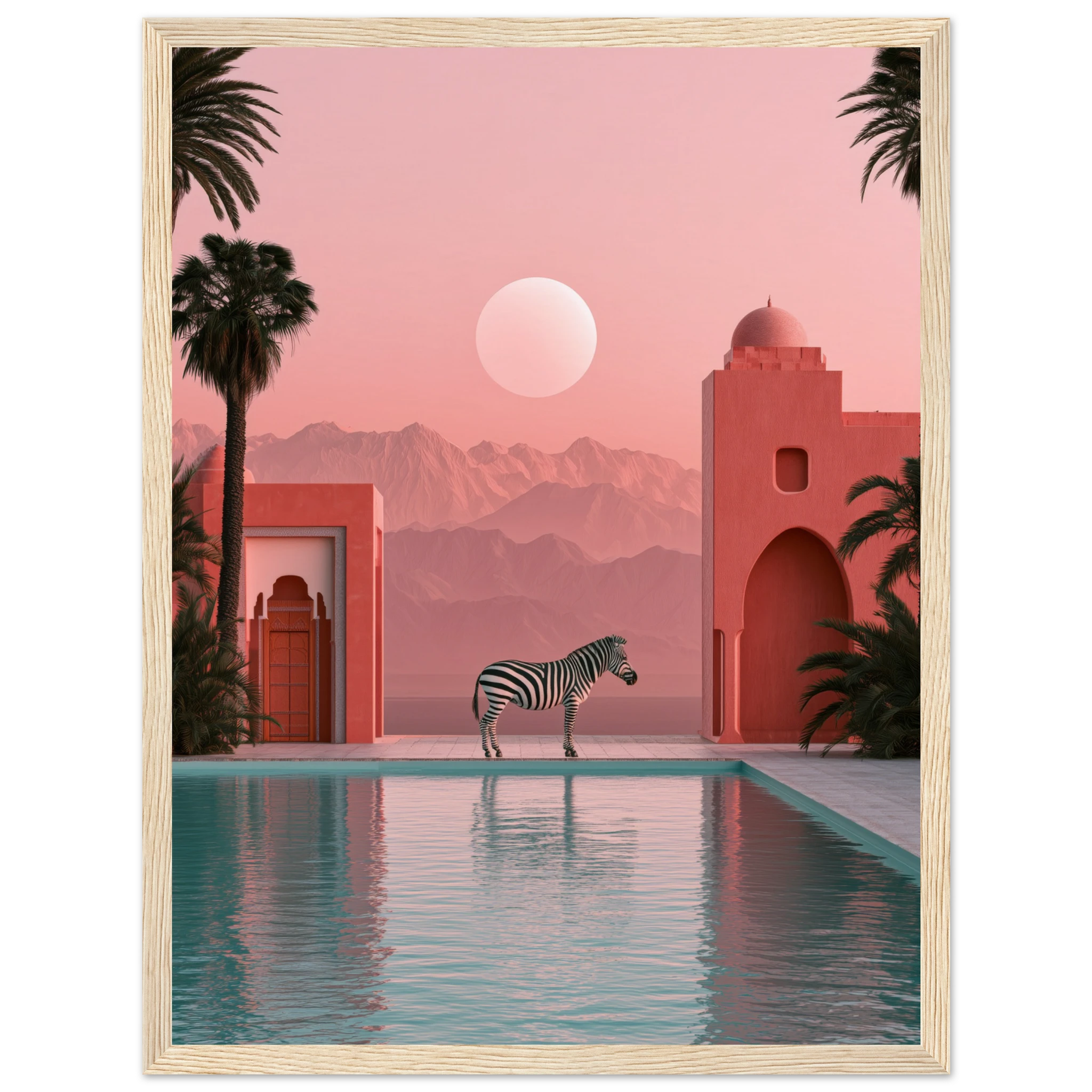
Animal wall art is having a design moment — and not in the way you might expect. Not a jungle theme, not a nursery mural. In the most considered interiors of 2026, wildlife prints are becoming the kind of statement piece that defines a room. Surreal, premium, and deliberately unexpected.
Why Animal Art Prints Are Trending in 2026
The interior design shift of recent years has been toward personality — rooms that say something about the person who lives there, not just the style they aspire to. Blank walls and predictably safe décor have had their moment. What’s emerging in their place is bolder, more specific, and more alive.
Animal wall art now sits at the intersection of luxury and wit. A Moroccan riad with a zebra print above the bed. A Palm Springs living room anchored by a poolside hippo. These aren’t ironic choices — they’re confident ones, made by people who understand that the best interiors always include at least one thing you didn’t expect.
The Animals That Work (and Why)
Not every animal reads the same on a wall. The choice of subject matters as much as the composition.
Zebras carry a natural graphic quality — their stripes are almost abstract at scale. Against warm plaster or pale stone, a zebra print creates a tension between the architectural and the wild that’s difficult to replicate any other way.
Hippos are the surprising ones. Ungainly in nature, strangely elegant in art — especially when placed in unexpected contexts. The contrast between subject and setting is the entire point.
Big cats — leopards, panthers, lions — bring a cinematic quality. Against dark walls or pale linen, a large-format big cat print has a presence that few other subjects can match.
Dogs, particularly when rendered in lifestyle scenes, walk the line between warmth and wit. They add personality without sacrificing curation.
How to Style Animal Wall Art Without Overdoing It
One focal point per room. An animal print should be the statement, not one of many competing for attention. Keep surrounding décor quieter — neutral linens, natural textures, considered pottery.
Prints that work here: the Elephant Duet in the Sea Framed Print and the Andalusian Courtyard Framed Print — each available as a framed print, ready to hang. Browse the Animals collection for more.
Scale is everything. A small animal print on a large wall reads as hesitant. If you’re committing to a zebra, commit fully. A 60×80cm framed print — or larger — given enough wall space to breathe.
Context creates meaning. The same animal wall art print in a minimalist white room and a dark, layered space creates entirely different atmospheres. Neither is wrong — but know which one you’re building.
Metallics amplify the effect. Gold frames, brass fixtures, copper accents — these pair particularly well with the earthy warmth of wildlife art prints, especially those with African or Mediterranean influence.
The Best Rooms for Animal Wall Art
Living rooms are the natural home for large-format animal prints. A canvas above a sofa creates instant impact. A framed print above a credenza — slightly smaller, more composed — works just as well for those who prefer restraint.
Bedrooms respond well to wildlife scenes with calm, dramatic quality. The graphic elegance of a zebra or the stillness of a big-cat print translates naturally to a confident bedroom atmosphere.
Hallways are underrated. A narrow corridor with a strong vertical animal print transforms what’s usually dead space into something deliberately considered.
Home offices benefit from a single, unexpected art choice. A bold wildlife print behind a desk communicates something about the person sitting there. Make it count.
Atelier Marbella: Surreal Wildlife Art for the Modern Interior
Our animal art prints don’t put wildlife in nature. They place it somewhere else entirely.
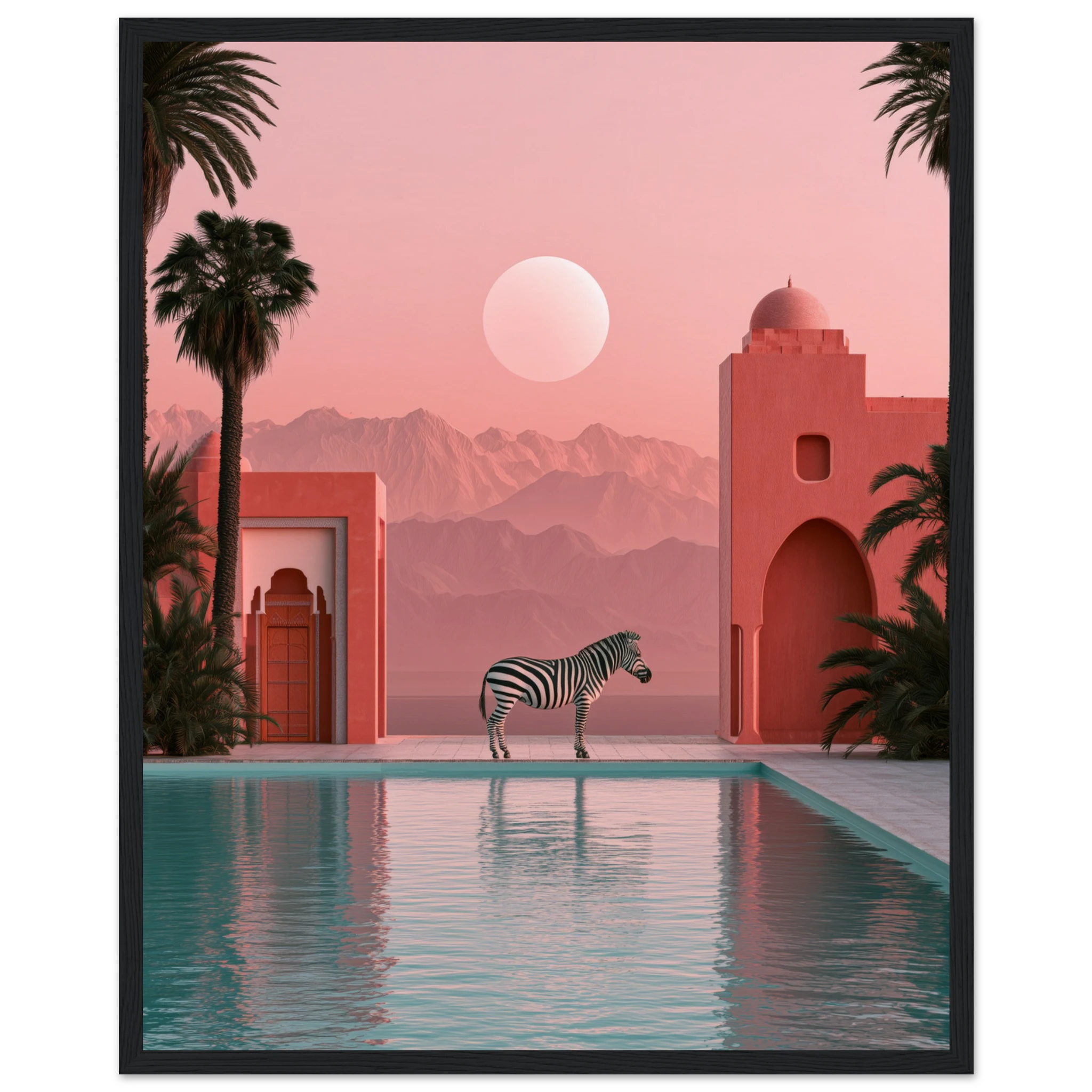
Zebra at the Pink Riad places a lone zebra against the blush architecture of a Moroccan riad. A scene that never happened, yet feels completely inevitable. The geometry of the stripes against handmade walls. The light. The stillness. Available as a framed print, canvas, or matte art print.
Beach Hippo in Palm Springs does the same for the California desert — a hippo poolside, surrounded by mid-century architecture and the specific quality of afternoon light that only exists there. The contrast is the whole point.
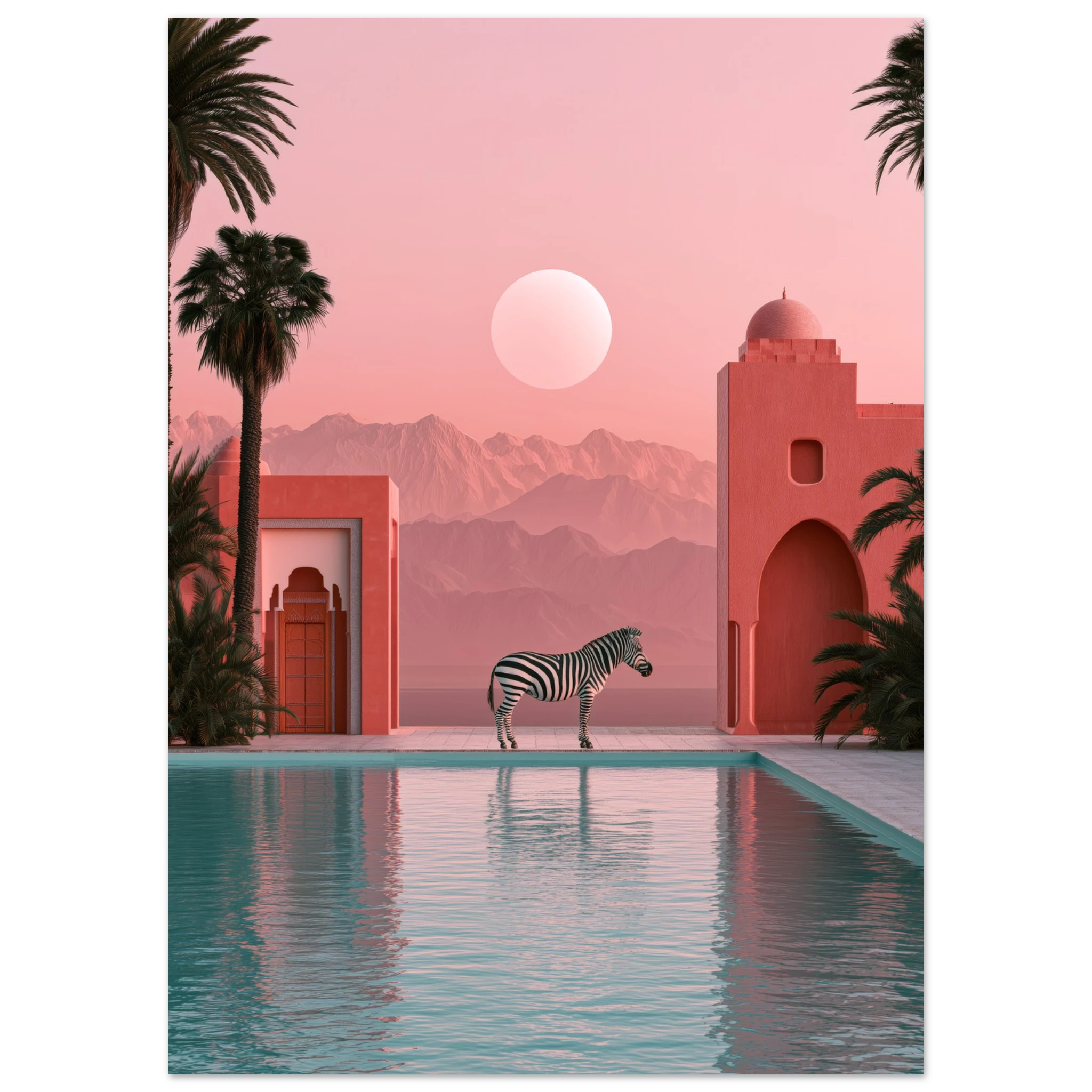
These prints don’t explain themselves. They don’t need to.
Framed, Canvas or Matte?
Framed prints add presence and formality. A simple black or natural wood profile grounds the image and gives it the weight of a gallery piece — right for when you want the animal wall art to feel like an acquisition, not a decoration.
Canvas is warmer, softer. Better for bedrooms or spaces where a more relaxed atmosphere is the goal. The canvas texture adds depth to wildlife imagery in a way flat paper can’t.
Matte prints are the most versatile — clean, precise, and unframed. They work well in minimal or contemporary settings where the image carries all the weight.
When in doubt: go framed.
1. The Vertical Statement: Giraffes Wall Art
These animals are natural verticals. The Giraffes Wall Art print uses that height deliberately — the composition pulls the eye upward and makes any room feel taller. As a result, it works best in a living room where the ceiling is generous and the wall needs a focal point that earns its scale. At 70×100 cm on canvas, this is one of those pieces that fills a wall without overwhelming it. Frame it for a softer finish, or go gallery-stretched for clean, contemporary presence.
2. Elephant Duet in the Sea — for Calm, Considered Spaces
Two elephants beside a turquoise sea. The Elephant Duet in the Sea is the quietest animal wall art piece in the collection — unhurried, elemental, built on stillness. It works in a bedroom above the headboard, a reading corner where atmosphere matters more than decoration, or a living room that values depth over spectacle. Furthermore, the turquoise palette makes it exceptionally versatile — equally at home in neutral interiors and warmer Mediterranean settings.
3. The Maximalist Choice: Bougainvillea and Leopard
Pink bougainvillea cascading over a leopard. Bougainvillea and Leopard is the statement piece of the animals collection — the one for rooms that commit to a point of view. Above all, it rewards a confident setting: a living room with warm textures and natural materials, or a hallway that needs to make an immediate impression. Frame it in antique gold or deep black. Either way, the composition holds the wall with confidence.

4. Bold and Tropical: Flamingos Cocktail Bar
Flamingos don’t do subtle, and neither does this print. Flamingos Cocktail Bar brings tropical pink energy and cocktail-hour glamour into one maximalist composition. In particular, it belongs above a drinks cabinet or sideboard — or in a dining room that embraces colour without apology. Additionally, it pairs naturally with rattan, marble, and warm gold accents, making it a strong anchor for gallery wall arrangements where it becomes the boldest piece in the room.
5. Dachshund in Saint-Tropez — for Dog Lovers with Good Taste
The Dachshund in Saint-Tropez series is for the dachshund owner who wants a tribute that doesn’t look like one. Indeed, this is editorial animal wall art — the dog rendered with the same graphic seriousness as any fashion subject. Hang it in a living room, a hallway, or a study. It works solo as a clean standalone piece, or as part of a gallery wall where it provides wit without sacrificing the overall aesthetic.
6. The Peacock — for Colour and Pattern
The Peacock is the most decorative piece in the animals collection — structured pattern, bold colour, genuine presence. As a standalone statement, it works in a bedroom or living room with equal conviction. Alternatively, use it as the anchor in a gallery wall where everything else steps back. Frame it in rich warm gold to lean into the opulence, or in slim black to restrain it. Both approaches work — both are deliberate.
7. High-Contrast Drama: Dachshund Dogue Black Fire
Black tones and fire. Dachshund Dogue Black Fire is the most graphic animal wall art piece in the collection. On a white wall with a slim black frame, the contrast is immediate and total. Conversely, against a dark background, the fire elements create their own inner light. In either case, it suits a home office that refuses to be boring, a hallway that sets a mood before a word is spoken, or a living room where the art is expected to do serious visual work.
How to Style Animal Wall Art
- One statement, one room. Animal wall art works best as a focal point, not background. Therefore, pick one piece and let it hold the wall rather than competing with others.
- Match energy, not just subject. A calm piece like Elephant Duet suits a calm room. In contrast, a bold piece like Bougainvillea and Leopard suits a room with warmth and texture already in place.
- Frame choice matters. Black reads editorial and contemporary. Natural oak reads warm and organic. Antique gold reads maximalist. Consequently, match the frame to the piece’s character, not just its colour palette.
- Scale up when in doubt. Animal wall art that’s too small looks merely decorative. At the right scale, however, it looks considered and intentional. When choosing between 50×70 and 70×100 for a living room, take the larger one.
Explore the full Animals collection — all pieces available in matte, canvas and framed prints.
FAQ
What size animal wall art should I choose for a living room?
For a living room statement piece, aim for at least 50×70cm — ideally 70×100cm or larger. The image needs to be visible and commanding from the seating area. A print that’s too small on a large wall reads as hesitant rather than considered.
Can animal art prints work in a minimal interior?
Absolutely. Minimalism often benefits most from one strong focal point. A single oversized animal print in an otherwise neutral room creates more impact than a full gallery wall of smaller pieces. The contrast does the work.
Are animal wall art prints suitable for hallways?
Yes — and particularly well-suited. Hallways reward vertically oriented prints with strong graphic quality: a zebra, a tall big-cat study, a giraffe. They transform a transitional space into something worth pausing in front of.
Read also:
Dachshund Wall Art: Why the World’s Most Iconic Dog Became a Design Statement
Wall Art Trends 2026: What’s Actually Worth Buying