
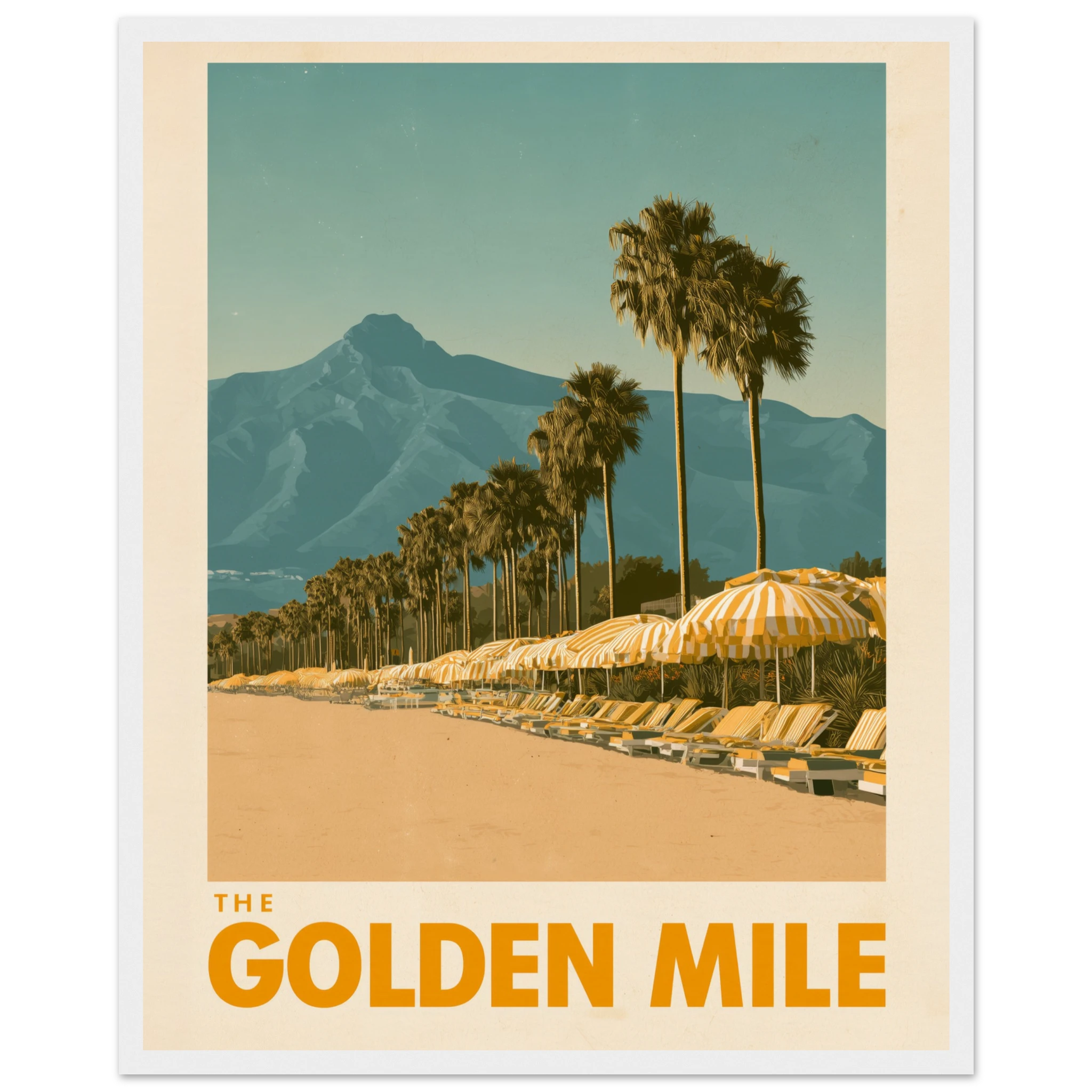
“Poster” and “art print” get used interchangeably online, but on a wall they behave very differently. One is a mass-produced sheet of thin paper; the other is a considered object with a specific paper weight, finish and lifespan. Knowing which is which changes what you should actually buy.
What Makes a Poster a Poster
A poster, in the strict sense, is printed on thin, lightweight paper — usually under 150gsm — using processes built for volume rather than longevity. Posters are designed to be cheap, replaceable and often temporary: gig posters, movie promos, dorm-room decor. They curl at the corners, fade faster under direct light, and rarely survive a house move flat.
None of that makes posters bad — it makes them a different category of object, built for a different job.
What Makes an Art Print an Art Print
An art print — sometimes called a fine art print or giclée — is printed on heavier, archival-grade paper, typically 200gsm or more, using pigment inks designed to resist fading for decades rather than months. The paper itself often has texture: a matte, slightly toothy surface instead of a glossy poster sheen. It’s built to be framed, kept, and looked at for years, not replaced each semester.
This is the category Atelier Marbella prints sit in: matte art paper, canvas, or framed — never poster stock.
Paper Weight and Finish, Side by Side
Weight is the easiest way to tell the two apart before you even touch the paper. Posters typically run 90–130gsm — thin enough to see light through if you hold a sheet up to a window. Fine art matte paper runs 200gsm and up: rigid enough to stay flat on its own, with enough tooth to hold fine detail without the ink pooling or bleeding at the edges.
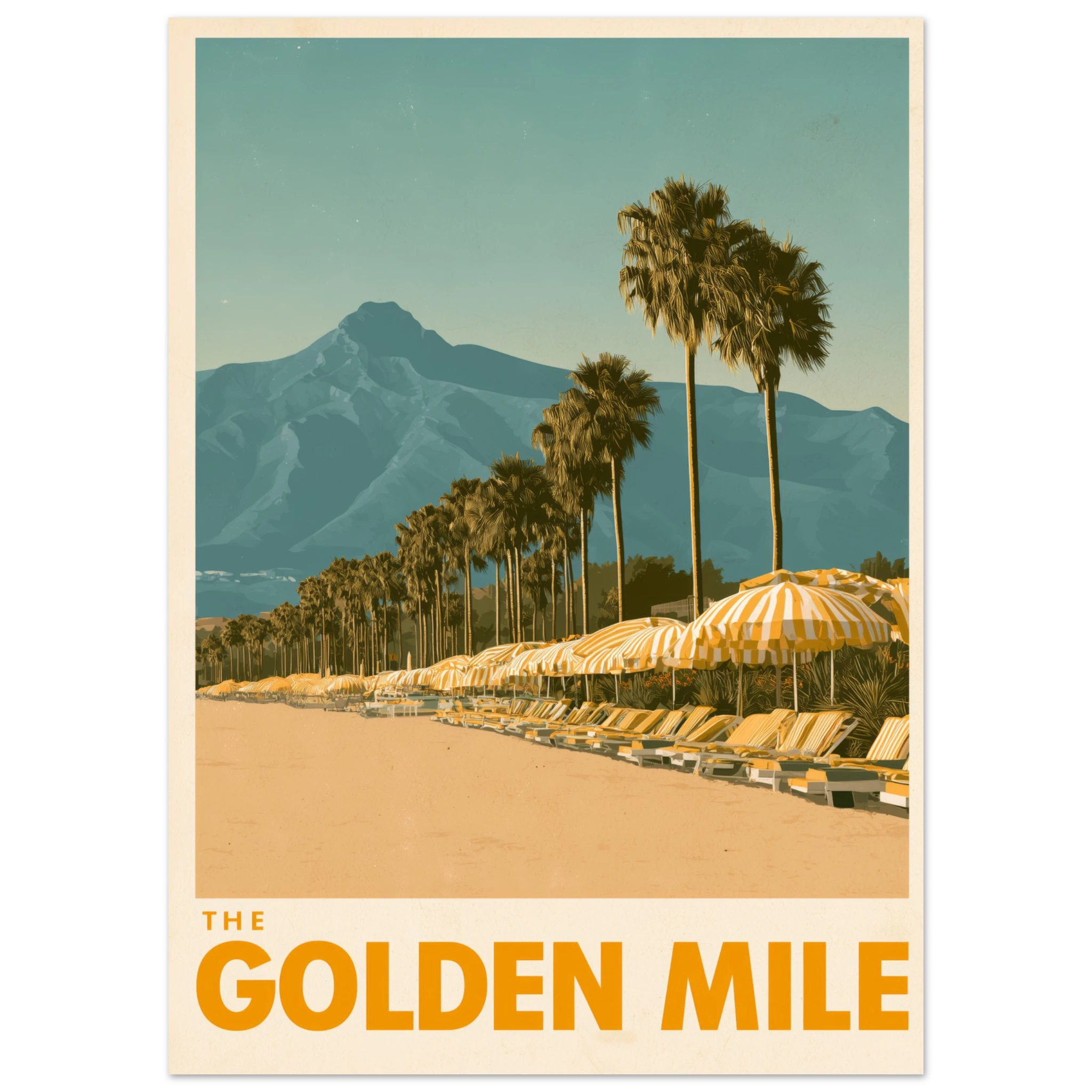
The Golden Mile Matte Art Print (€34.90) is a good example of where a poster-style image gets upgraded to art-print paper — same composition, completely different object in the hand.
Longevity: What Actually Fades
Most posters use dye-based inks, which are vivid out of the box but break down under UV light within a couple of years — especially reds and blues. Fine art prints use pigment inks, which sit on the surface of the paper rather than soaking into it, and typically carry a lightfastness rating of 80–100+ years out of direct sun. If a print is going somewhere bright, this is the difference between replacing it in two years and never thinking about it again.
Canvas: A Third Option, Not a Poster Alternative
Canvas prints sit outside the poster-vs-art-print debate entirely — they’re a different substrate, stretched over a wooden frame rather than laid flat under glass. What they share with fine art paper is the ink: pigment-based, gallery-grade, not the dye stock used for cheap posters. Canvas suits a room that wants texture and a frameless, gallery-wrapped look rather than a hard edge.
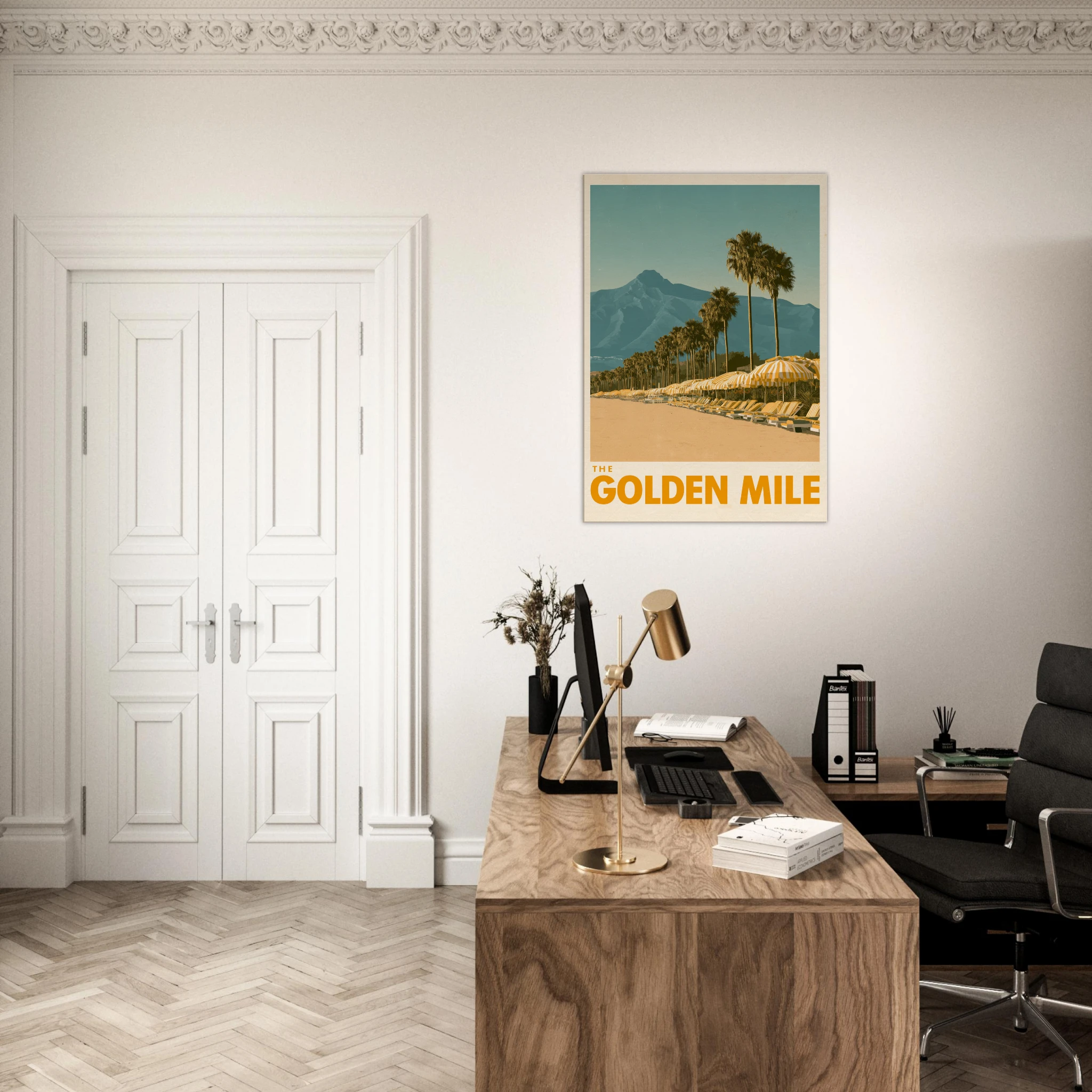
The Golden Mile Canvas Print (€59.90) shows the same artwork with that softer, textured finish — worth comparing directly against the matte version before deciding. For more on finish differences specifically, see our matte vs. canvas guide.
Framing Changes the Calculation
A poster behind glass in a cheap frame can look surprisingly close to an art print — for a while. The gap shows up over time: thin paper waves and buckles inside a frame as humidity shifts, where heavier art paper stays flat. If you’re framing anyway, buying poster-weight paper to save a few euros usually costs more in the long run, either in a second frame job or a curling print you have to replace. A Golden Mile Framed Print (€89.90) arrives ready-to-hang, already solved.
Which One Should You Actually Buy
Buy a poster when the image is disposable by design — a temporary rental wall, a kid’s room they’ll outgrow, a one-season trend. Buy a fine art print when the piece is going somewhere you’ll look at it for years: a living room, a hallway, above a bed. Buy canvas when you want texture and a frameless look. Buy framed when you want it solved the day it arrives. None of these are upgrades of each other — they’re different tools for different walls.
FAQ
Is a giclée print the same as a fine art print?
Yes — giclée is simply the technical term for the pigment ink-jet process used to make fine art prints. The words are used interchangeably in most shops, including ours.
Can a poster be reprinted as a fine art print?
Yes, as long as the original file is high enough resolution. The image itself doesn’t determine the category — the paper, ink and printing process do.
Do fine art prints cost much more than posters?
They typically cost more per sheet, but the gap is smaller than people expect, and a fine art print doesn’t need replacing every year or two the way a cheap poster often does.
Does framing a poster fix the paper quality issue?
It slows fading if the frame has UV-filtering glass, but it doesn’t fix the paper itself — thin poster stock still buckles and yellows faster than archival art paper, glass or no glass.
Read also: Matte vs. Canvas: Which Print Finish Is Right for You?, How to Frame a Print, and Art Print Sizes: How to Choose the Right Format for Your Wall.