
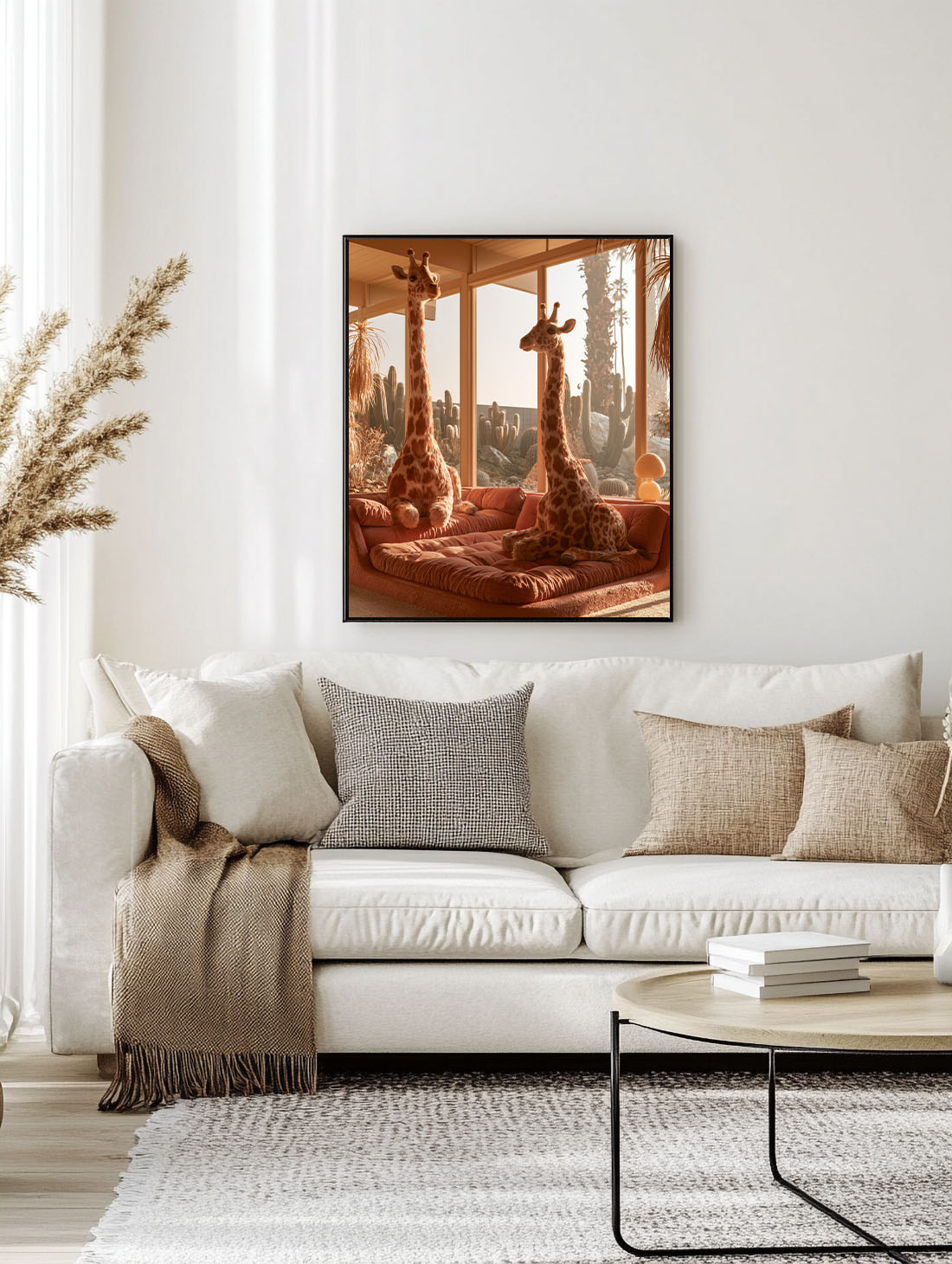
The print is the idea. The frame is the decision that determines whether the idea lands. Framing art prints is not a technical afterthought — it is the final edit, and a wrong frame can undermine even an exceptional print. A right frame makes the print look like it was always meant to be there.
Frame vs Frameless: The First Decision
Not every print needs a frame. Canvas prints are specifically designed to hang without frames — the wrap around the stretcher bar is part of the presentation. Floating a canvas in a room without any frame is a deliberate aesthetic choice and a valid one.
Matte art prints and photographic prints, however, need either a frame or a mount. Without one, the print lacks the visual boundary that tells the eye where the image ends and the wall begins. The frame is the final element of the composition — it signals investment in the print, the room, and the decision.
Frame Materials: Wood, Metal, or Acrylic
Wood frames are the most versatile. A natural wood frame — pale oak, dark walnut, bleached ash — connects the print to organic warmth and texture. They suit Mediterranean, Scandinavian, and transitional interiors. Painted wood in flat black, flat white, or off-white gives a gallery finish that removes the material from the conversation and lets the print speak entirely.
Metal frames in brushed aluminium or steel carry precision and weight. Thin-profile metal frames — 8 to 12mm face width — add a graphic precision that wood cannot replicate. Brass or gold-toned metal frames create warmth through material contrast, pairing particularly well with black and white prints.
Acrylic face-mounting — where the print is mounted directly behind a thick sheet of clear acrylic — is a gallery standard for photographic prints. The acrylic amplifies colour depth and creates a luminous quality. It is expensive, heavy, and committed — not the choice for every print, but exceptional for a main wall anchor piece.
Glass vs Plexiglass vs No Cover

Regular glass reflects at certain angles, creating hot spots that obscure the print. Anti-reflective glass eliminates this at a modest price increase. For anything larger than 50×70cm, anti-reflective glass is worth the cost.
Prints that work here: the Porsche & Leopard Framed Print, the Baroque Pool Framed Print and the Figs Framed Print — each available as a framed print, ready to hang. Browse the full collection for more.
Plexiglass (acrylic glazing) is lighter than glass, does not shatter, and handles transport better. Modern museum-grade plexiglass is optically superior to most glass options. It is the standard choice for larger prints and for prints hung in high-traffic areas.
No cover is used for canvas, which needs to breathe. For paper-based matte prints, no cover is not recommended — dust settles on the surface and cleaning it risks damage.
The Matboard: Why It Matters More Than the Frame
The mat — the border between the print and the frame — is the most underrated element of framing. A matboard does three things: it creates breathing room around the image, it draws the eye inward toward the centre, and it adds perceived value — matted work looks more finished and more gallery-like.
The standard mat is white or off-white, 5 to 8cm wide on each side. A wider mat (8 to 12cm) gives more presence and is worth considering for larger pieces. The mat colour should be neutral unless there is a deliberate decision to echo a colour from within the print itself.
→ Browse Atelier Marbella framed prints — each framed print is finished with care and delivered ready to hang across Europe.
How to Frame a Print: Matching Style to Subject
Mediterranean and coastal prints → natural wood (light oak or washed white), or thin black for a more graphic approach. Avoid heavy ornate frames that fight the lightness of the subject.
Fashion and editorial prints → flat black or flat white painted wood, clean and graphic. The frame that says “this is art” without commentary.
Automotive and architectural prints → thin black or brushed metal. Precision framing for precision subjects. A wood frame on a Ferrari print introduces a rusticity that the subject does not call for.
Animal and nature prints → natural wood for warmth, or flat black for graphic impact. The subject is strong enough to carry either direction.
Why Framing a Print Makes All the Difference
A print without a frame can look unfinished — even if the artwork itself is exceptional. Framing anchors a piece to its surroundings, creates a visual boundary that draws the eye in, and signals intention. The right frame doesn’t just protect your print; it becomes part of the composition. This is especially true for matte fine art prints, where the interplay between the paper, mat, and frame is what gives the whole thing its gallery feel.
How to Frame a Print: Choosing the Right Frame
The frame should complement both the artwork and the room. The main options:
Thin metal frames (black, white, brushed gold) are the contemporary default. They don’t compete with the art, work across almost any print style, and age well. If you’re unsure, a slim black frame is almost never wrong.
Natural wood frames — light oak, walnut, raw timber — add warmth. They suit botanical prints, Mediterranean lifestyle art, and photography particularly well. Best in rooms with natural materials: linen, rattan, terracotta.
Ornate or gilded frames suit maximalist spaces and dramatic large-format pieces. Use one per wall, maximum — the statement loses impact when multiplied.
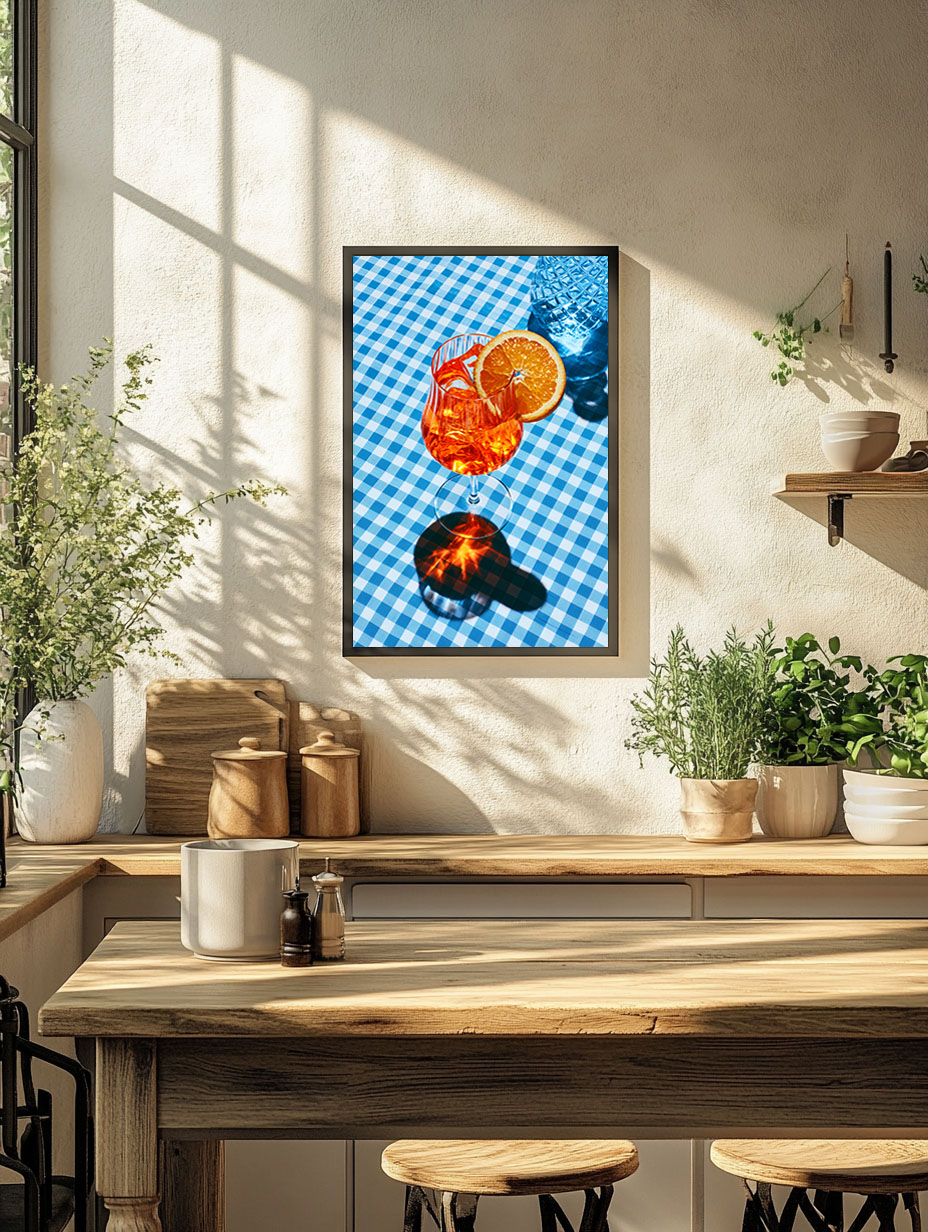
The Role of Matting When You Frame a Print
The mat — the border of card between the print and the glass — does two things: it prevents the print touching the glass, and it creates visual breathing room. Wider mats feel more luxurious; museums use deep mats for exactly this reason. A standard mat is around 5–7 cm; for a proper gallery look, go 8–10 cm. White or off-white is the safest choice and keeps focus on the artwork.
How to Frame a Print for Different Rooms
Living room: Go bigger and bolder. A large frame in a statement material — brushed brass, dark walnut — commands the wall. If grouping prints, keep all frames consistent.
Bedroom: Softer and more intimate. Light wood or white frames in smaller formats feel restful. Avoid anything too graphic or high-contrast — the bedroom should calm, not stimulate.
Dining room: Prints with personality work well here — botanicals, lifestyle scenes, abstract shapes. Matching frames in a consistent finish keep a gallery wall elegant rather than chaotic.
Hallway: Vertical prints in slim frames. A row of identically framed pieces along a hallway is a classic move that always lands.
Getting the Frame Size Right
The most common mistake when framing a print is going too small for the wall. The general rule: the artwork including frame should cover 60–75% of the wall it’s on. Above a sofa, the piece should be roughly two-thirds the sofa’s width. When in doubt, go larger — a slightly oversized piece almost always reads better than one that gets lost.
Common Mistakes to Avoid When Framing a Print
Hanging too high. Eye level means the centre of the piece at around 145–150 cm from the floor. Most people hang art too high, which disconnects it from the room.
Mixing too many frame styles. Three different frame materials in the same space creates visual noise. Stick to one or two finishes.
Skipping the mat. A frameless print often looks cheaper, not simpler. A well-proportioned mat is always worth it.
Standard glass. It reflects light and can wash out the print. Anti-reflective or museum-grade glass is a meaningful upgrade — especially in rooms with strong natural light.
Ready-to-Hang vs. Custom Framing
Custom framing gives you complete control — frame style, mat depth, glass grade — and for a centrepiece it’s worth the cost. That said, quality ready-to-hang frames work perfectly well for standard sizes: A3, A2, 50×70 cm, 70×100 cm. At Atelier Marbella, our framed prints arrive ready to hang — the frame is chosen to complement the artwork, and every piece is mounted so there’s nothing left to do but find the right wall.
The Detail That Ties It All Together
Learning how to frame a print well is about slowing down and making deliberate choices. The frame, the mat width, the height on the wall — none of these are afterthoughts. They’re what separate a space that feels designed from one that simply has art in it. Get one piece right, and the rest of the room follows.
FAQ — How to Frame a Print
What type of frame is best for art prints?
It depends on the print and the room. Natural wood frames suit Mediterranean and organic interiors. Flat black or white painted wood frames give a gallery finish. Thin metal frames in black or brass suit contemporary and minimalist rooms.
Do you need a mat (matboard) when framing a print?
A mat is not required but is strongly recommended for paper-based prints. It creates breathing room around the image, draws the eye inward, and gives the finished piece a gallery quality.
What is the difference between glass and plexiglass for framing?
Plexiglass is lighter, does not shatter, and handles transport better than glass. Museum-grade plexiglass is optically superior to standard glass. For prints larger than 50×70cm, plexiglass is the better choice.
Do canvas prints need frames?
No. Canvas prints are designed to hang without frames — the wrap around the stretcher bar is part of the presentation. Floating a canvas without a frame is a deliberate and valid design choice.
Read Also:
→ Matte vs Canvas: Which Print Finish Is Right for You?
→ How to Build a Gallery Wall
→ Black Frame vs Wood Frame: Choosing the Right Frame for Your Print