
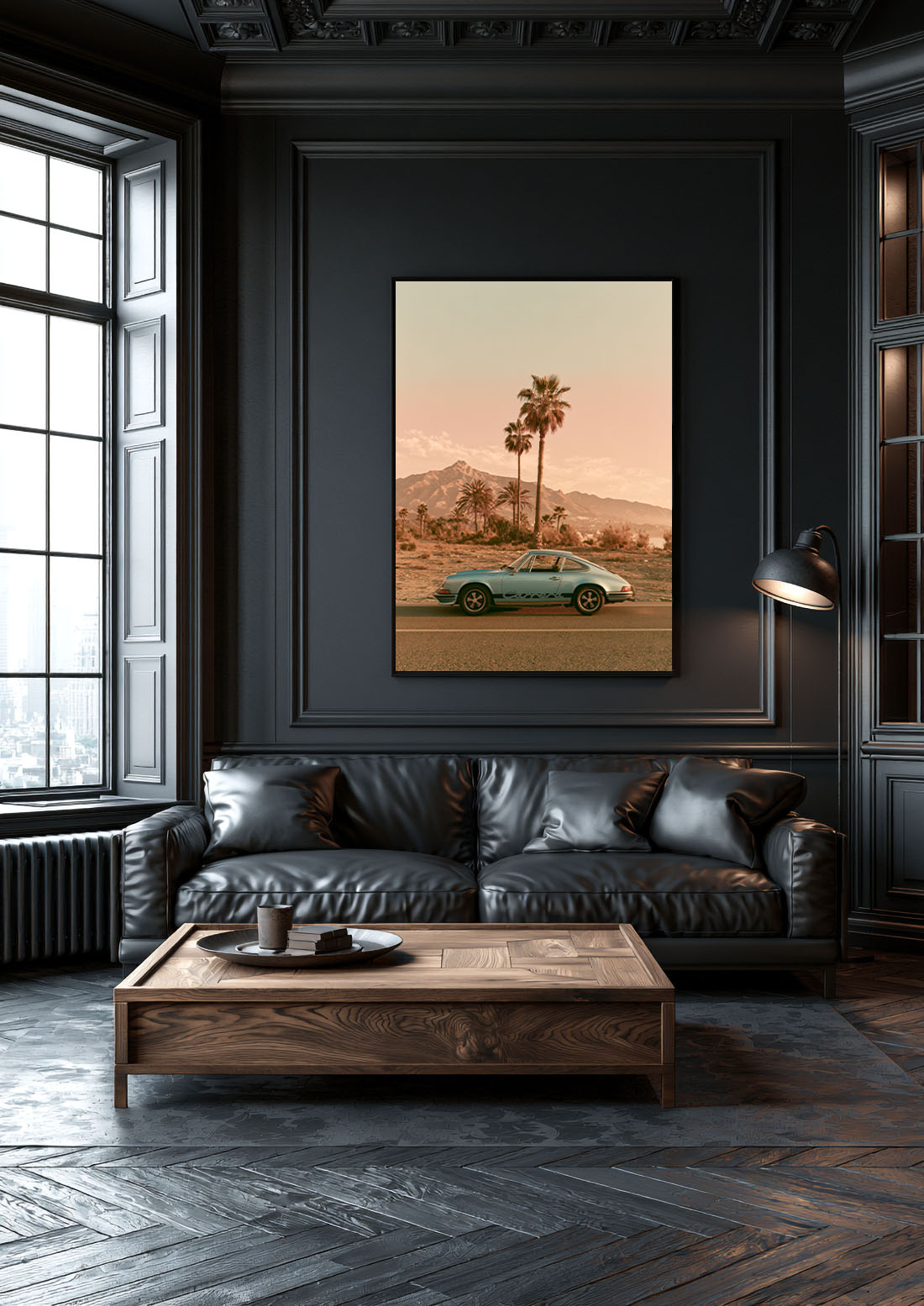
You’ve found the print. You love the image. Then comes the question nobody warns you about: matte or canvas? It sounds like a minor detail. It isn’t. The finish changes everything — how the print reads in a room, how it catches light, what kind of frame it needs, and ultimately whether it feels like a considered piece of art or an afterthought. Here is how to choose — and when the matte art print vs canvas debate actually matters.
In This Article
- What Is a Matte Art Print?
- What Is a Canvas Print?
- How They Look on the Wall
- When to Choose Matte
- When to Choose Canvas
- Which Finish Works Best for Mediterranean Interiors?
- FAQ
What Is a Matte Art Print?
A matte art print is an image printed on fine art paper — typically a thick, uncoated or lightly coated stock with a smooth, non-reflective surface. At Atelier Marbella, the matte art print uses 200 gsm fine art paper, the same weight used in museum-quality editions. The result is a surface that absorbs light rather than bouncing it back.
What this means in practice: no glare, no reflections, no compromise depending on where you hang it. You can place a matte print opposite a window, under a ceiling spotlight, or in a south-facing room without the image washing out. The colours read as the artist intended — rich, accurate, stable.
Matte prints are always framed. The paper needs to be mounted and protected behind glass or acrylic. That framing step is part of the experience — it gives you full control over how the finished piece looks, from frame colour to mat board width.
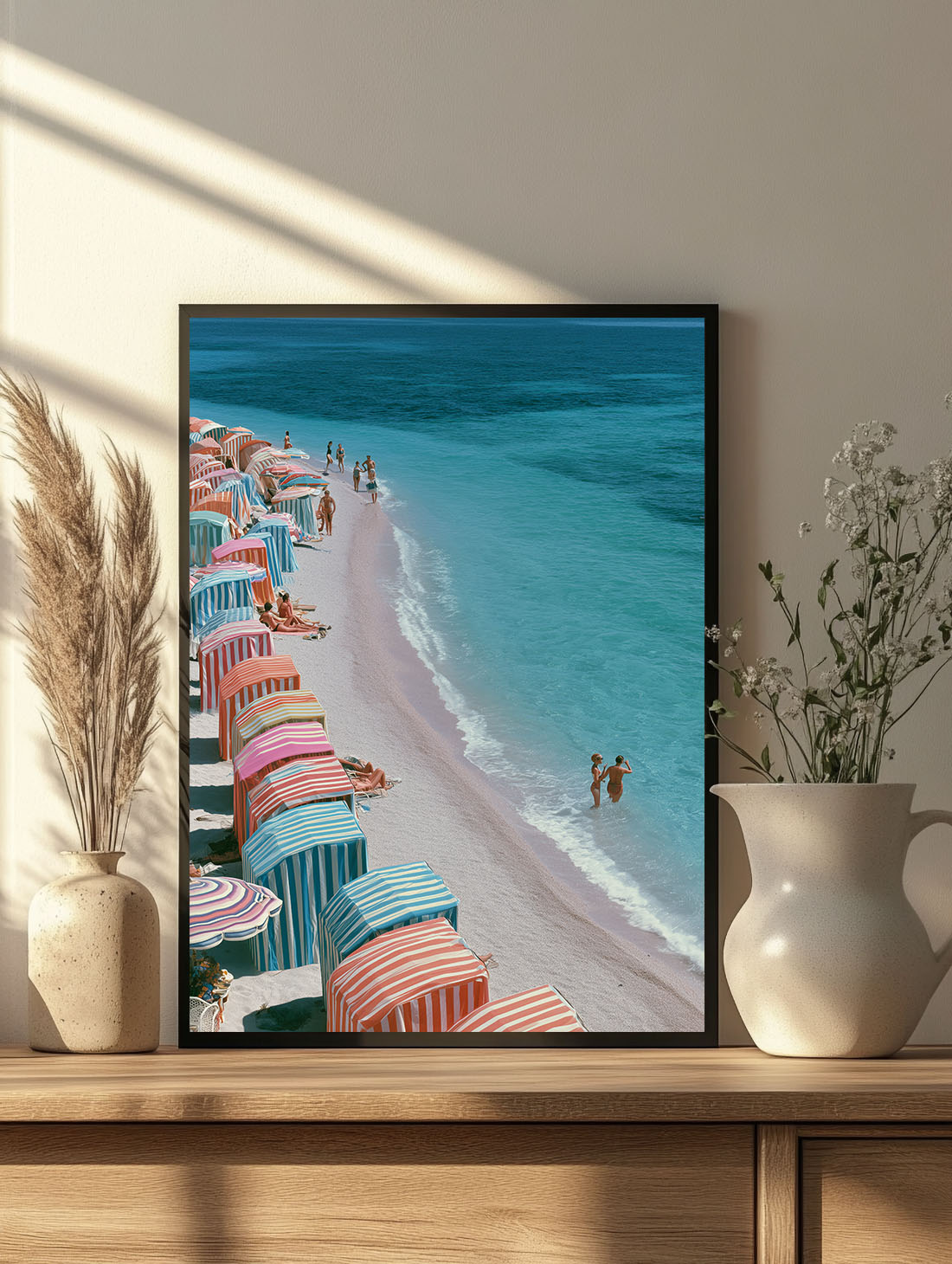
What Is a Canvas Print?
A canvas print is an image printed directly onto canvas fabric — the same material used for oil paintings — then stretched tightly over a wooden frame. The result is a standalone object that hangs directly on the wall with no additional framing required.
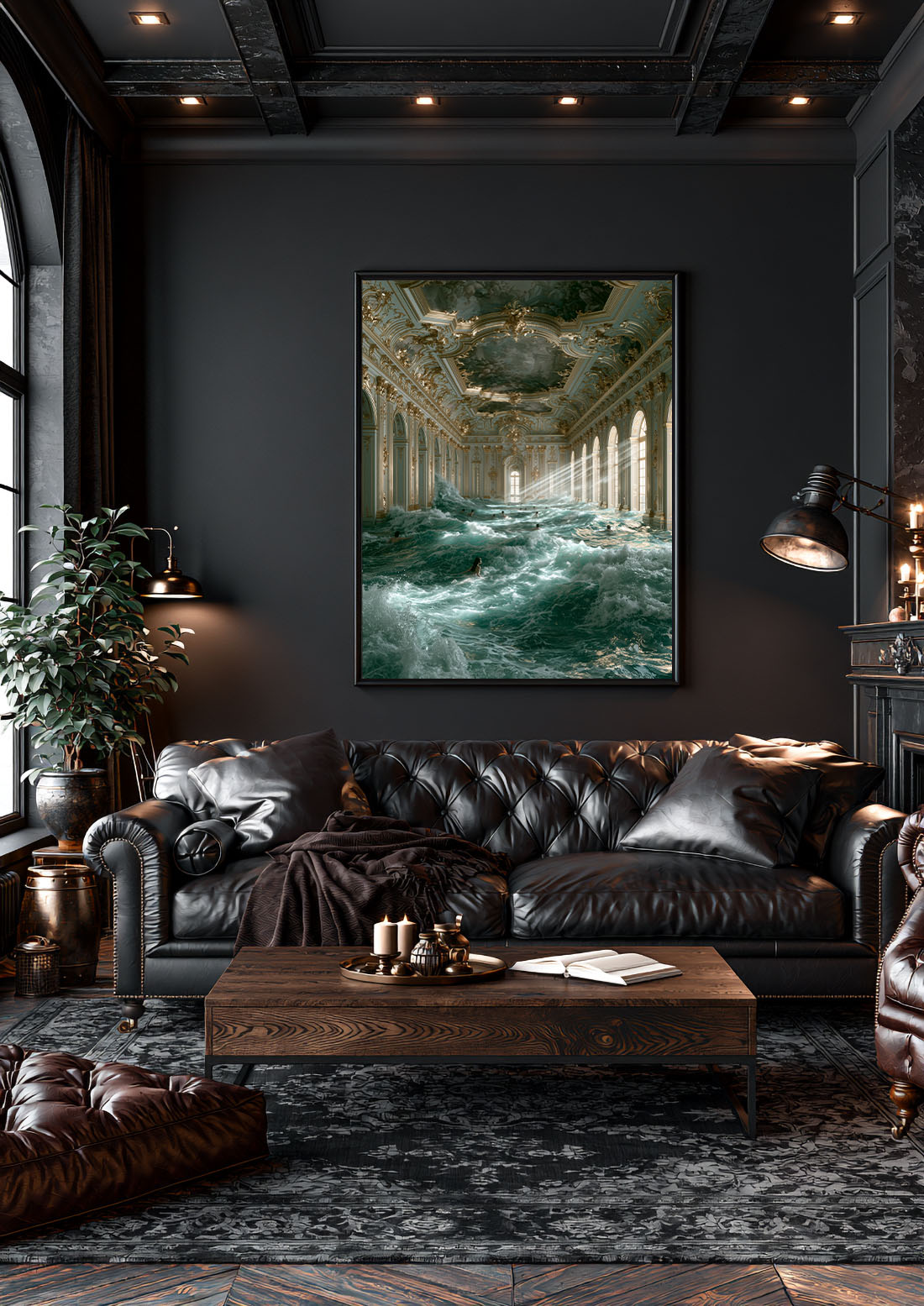
Prints that work here: the Baroque Pool Framed Print, the Porsche & Leopard Framed Print and the Lemons on Marin — Mediterranean Still Life Framed Print — each available as a framed print, ready to hang. Browse the full collection for more.
Canvas has a subtle texture from the weave of the fabric. Under direct light, that texture catches and holds shadows in a way that gives the image a slightly painterly, three-dimensional quality. It is not a reproduction of a painting — but it reads closer to one than a flat paper print does.
Canvas prints arrive ready to hang. The image wraps around the edges of the frame — a technique called gallery wrap — so the sides show a continuation of the image or a clean mirrored edge. There is nothing else to buy, nothing else to do. You hang it and it is done.
Matte vs Canvas: Quick Comparison
| Matte Art Print | Canvas Print | |
|---|---|---|
| Surface | Fine art paper, non-reflective | Woven fabric, slight texture |
| Frame required | Yes | No (gallery-stretched) |
| Best for light | Any — no glare | Indirect light preferred |
| Best format | Small to mid (up to 70×100) | Medium to large (50×70+) |
| Look & feel | Gallery, refined, flat | Contemporary, painterly |
| Price | Lower (frame extra) | Higher (frame included) |
| Ideal room | Bedroom, office, hallway | Living room, open spaces |
How They Look on the Wall
Side by side, matte and canvas read very differently — even with the same image.
A matte art print framed behind glass looks sharp, editorial, and precise. The colours are flat in the best sense — contained, deliberate, clean. It reads like a photograph or a fine art edition. In a minimalist or contemporary interior, that clarity is exactly what you want. The frame adds architecture. The glass adds formality.
A canvas print reads differently. It projects slightly from the wall — the depth of the stretcher bar is usually two to three centimetres. That gives it presence in a room. The texture adds warmth. Without a frame, it integrates into a space more casually, which in certain rooms is an asset. It looks at home above a sofa, in a hallway, or in a bedroom where you want art without formality.
The short version: matte is crisper and more formal. Canvas is warmer and more immediate.
When to Choose a Matte Art Print
Choose matte when the image is highly detailed — fine illustration, photography with complex textures, or artwork where colour accuracy matters. The non-reflective surface lets you read every part of the image without interference.
Choose matte when the room has strong or varied light sources. Windows, skylights, pendant lights — all of these create reflections on surfaces. A matte print handles all of them without issue. A glossy surface or even a lightly coated canvas can flare badly under direct light.
Choose matte when you want to frame it yourself, or when you already have frames you love. The matte print gives you total control over the final look. Black frame, natural wood, thin metal profile, wide white mat board — the print is the constant, and the framing is the variable.
Choose matte for smaller to mid-sized formats. At 30×40 or 50×70, the refinement of fine art paper is most visible. The print feels like an object worth having. At very large formats — 100×140 and above — the scale starts to favour canvas, which holds its structure better without warping.
→ Browse the full collection of matte art prints at Atelier Marbella
When to Choose a Canvas Print
Choose canvas when you want art on the wall with no additional work. No framing appointment, no glass to clean, no mat board to select. Canvas arrives ready to hang and looks finished from day one.
Choose canvas for large formats. A 70×100 or 100×140 canvas has structural integrity that paper does not — the stretcher frame keeps it flat and taut without buckling. At that scale, the texture of the canvas also reads as a feature rather than a distraction.
Choose canvas for rooms that already have warm materials — exposed brick, timber, linen, terracotta. Canvas adds to that warmth rather than contrasting with it. In a very cool, white, minimal space, canvas can look slightly out of place. In a room with texture and character, it belongs.
Choose canvas when you are buying for someone else. As a gift, a ready-to-hang canvas print is easier — no framing decisions to navigate, no assembly required. It lands complete.
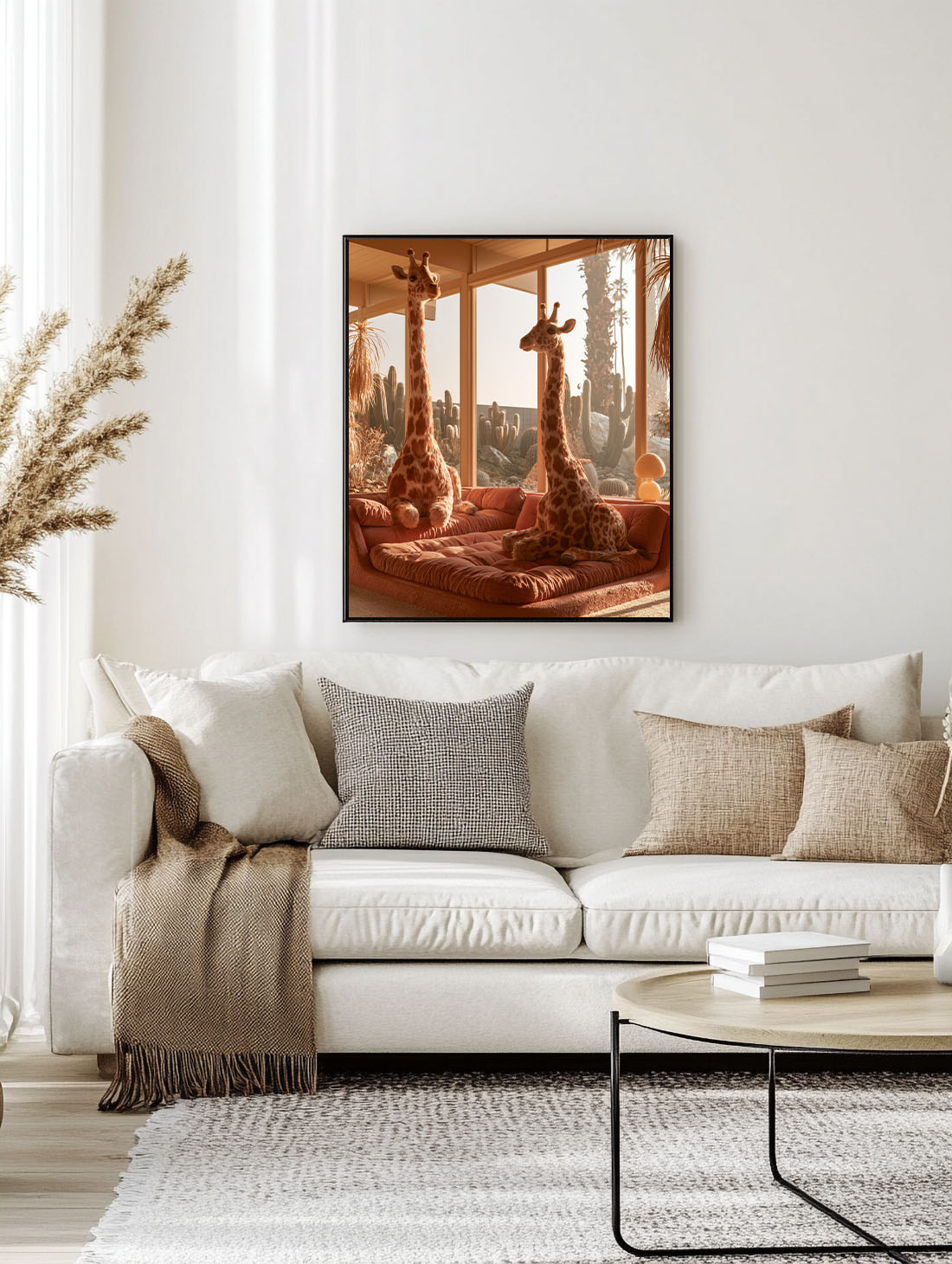
Which Finish Works Best for Mediterranean Interiors?
Mediterranean interiors — whether in Marbella, Amalfi, or their equivalent anywhere — tend to share a few qualities: whitewashed walls, natural light, textured surfaces, a deliberate mix of old and new. Both matte and canvas work well in these spaces, but they work differently.
Matte art prints, framed in black or natural wood, look at home against white plaster walls. They read like editorial choices — precise, intentional, collected. A gallery wall of three or four matte prints in matching frames is one of the most reliable ways to anchor a Mediterranean living room.
Canvas prints work better as singular statements. One large canvas above a sofa, above a bed, or in a hallway — placed alone, it reads as art rather than decoration. The warmth of canvas also complements terracotta, rattan, and linen better than a cold glass-fronted frame would.
If you are building a gallery wall: matte. If you are making a single statement: either works, but canvas needs less decision-making once it arrives.
→ Shop all prints at Atelier Marbella — available in matte, canvas, and framed editions. Still unsure about matte art print vs canvas? Every product page lists both options side by side.
What Is Canvas Print Finish?
Canvas print finish refers to the surface coating applied to the canvas after printing. It determines how the surface interacts with light — whether it absorbs it (matte), reflects it partially (satin), or bounces it back at full intensity (gloss). The finish doesn’t change the image itself, but it changes everything about how the image is perceived on the wall.
Most fine art canvas prints come in one of three finishes: matte, satin (sometimes called semi-gloss), and gloss. Each has a distinct character and a distinct set of ideal conditions.

Matte Canvas Finish
A matte canvas finish absorbs light rather than reflecting it. The result is a completely glare-free surface that looks the same from any angle, in any lighting condition, at any time of day. What you see when you’re standing directly in front of the print is what you see from the side, from below, and under a spotlight.
Best for: rooms with strong natural light, south-facing rooms, spaces with multiple light sources, and artworks where fine detail and tonal subtlety matter — landscapes, photography-style prints, scenes with complex textures. Matte finish tends to render these with exceptional depth and accuracy.
Worth knowing: matte finishes read slightly less saturated than gloss under identical conditions. The trade-off is consistency — the colours stay accurate and stable wherever you stand and whatever the light is doing.
Satin Canvas Finish
Satin sits between matte and gloss — a light sheen that adds depth and luminosity without the reflectivity that causes glare. It’s the most versatile of the three finishes, and for most rooms and most artworks, it’s the right default choice.
Best for: home offices, bedrooms, dining rooms, living rooms with mixed natural and artificial lighting. The subtle sheen brings slightly more vibrancy to colours than matte without the angle-dependency of full gloss. It makes colours pop just enough without becoming a light source of its own.
If you’re unsure which canvas finish to choose, satin is the answer. It’s the finish that performs well across the widest range of conditions, artwork types, and room setups.
Gloss Canvas Finish
A gloss canvas finish has high reflectivity. It makes colours deeper and more saturated — blacks become richer, colours more vivid — and gives the canvas surface a lacquered, almost photographic quality. The result, when conditions are right, is a print with exceptional presence and visual punch.
Best for: rooms with controlled or exclusively artificial lighting, bold graphic artworks, minimal compositions, and high-contrast images where colour saturation is the point. Crypto wall art, bold typography, and graphic prints designed for impact all benefit from gloss finish.
Worth knowing: gloss is unforgiving in bright natural light. A sunny room will cause the finish to mirror back the window, washing out the image entirely from certain angles. Gloss is a deliberate choice for a specific setup — not a default.
How to Choose the Right Canvas Print Finish
The right canvas print finish depends on three things: the room’s light, the artwork’s subject, and how you’ll be viewing the piece.
- Bright, sunlit room → matte finish. The glare-free surface means the print looks as good at noon as it does at dusk.
- Mixed lighting (natural + artificial) → satin finish. The light sheen adds vibrancy without reflectivity problems under different light sources.
- Controlled or artificial lighting only → gloss finish, if the artwork calls for it. The saturation payoff is real in the right conditions.
- Landscape, photography, or detailed artwork → matte or satin. Fine tonal work benefits from a non-reflective surface.
- Bold graphic or minimal composition → satin or gloss. Strong shapes and flat colour fields handle reflectivity well.
When in doubt: satin. It’s the finish that makes the fewest compromises.
Canvas Finish at Atelier Marbella
At Atelier Marbella, all canvas prints come with a UV-resistant semi-gloss finish — the satin-family choice that balances colour vibrancy with versatility. It works across the Mediterranean Mood, Animals, Cars, and Botanical collections without compromise, rendering warm coastal palettes, high-contrast animal compositions, and graphic crypto artworks equally well.
The canvas is gallery-stretched on a solid wooden frame with a 2 cm depth, arriving ready to hang. No framing decisions, no sourcing, no assembly. Just the print, finished, on the wall.
Explore the Mediterranean Mood canvas prints or browse the Cars collection to find a piece for your space.
FAQ
Is matte or canvas more expensive?
Canvas prints are typically priced higher than matte art prints in the same format — at Atelier Marbella, canvas adds roughly 30–50% to the base price of a matte print. However, canvas does not require an additional frame, which can offset the difference significantly depending on your framing choices.
Can matte prints be displayed without a frame?
Not comfortably. Fine art paper is not rigid — without a frame and backing board, it will bow and warp, particularly in rooms with fluctuating humidity. A simple clip frame is the minimum. A proper frame with a backing board is the right solution.
Do canvas prints look cheap?
A poorly printed canvas on thin fabric looks cheap. A well-printed canvas on quality fabric — with good ink, proper colour calibration, and a deep stretcher bar — does not. The difference is in the production. Atelier Marbella prints are produced by Gelato on professional canvas stock with archival inks.
Which lasts longer — matte or canvas?
Both are produced with archival-quality inks rated for 75–100 years under normal indoor conditions. Matte prints behind glass have an advantage in dusty or humid environments since the glass provides an additional barrier. Canvas prints can be gently wiped clean. In a well-maintained interior, both will last a lifetime.
Can I order the same image in both matte and canvas to compare?
Yes. Every Atelier Marbella artwork is available in matte art print, canvas print, and framed print editions. The image is the same — the finish is your choice.
Read also: Matte Art Prints: Why Interior Designers Always Choose Them · Gallery Wall: 5 Ways to Build One That Actually Works