
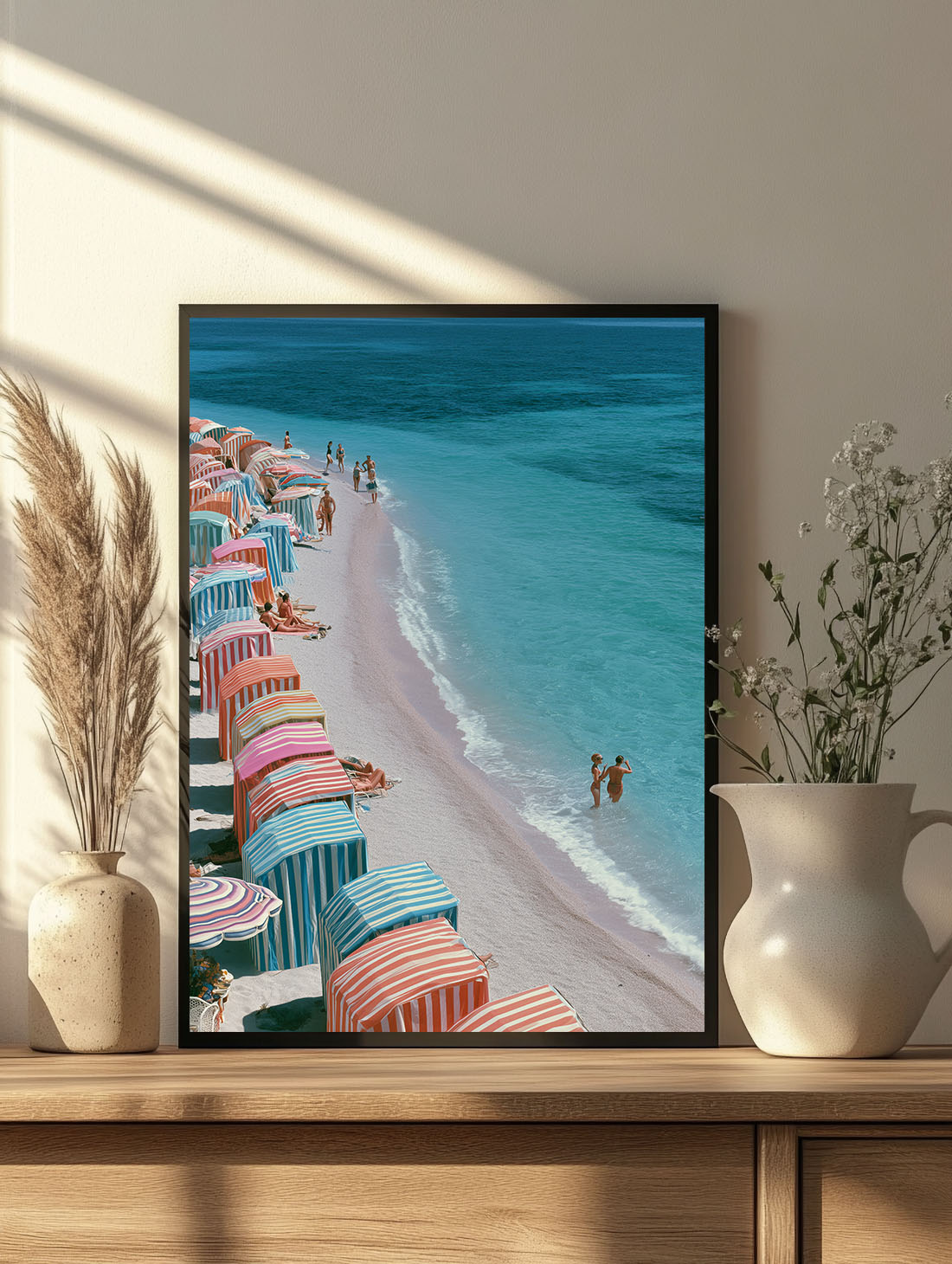
The sofa wall is the most visible surface in your living room. It frames conversations, anchors the room’s identity, and is the first thing guests actually look at. Yet it’s the space most people leave blank the longest — not from lack of taste, but from uncertainty about scale, style, and composition.
Here’s what works, and why.
Start With Scale: The Single Biggest Mistake
Most people go too small. A print that looks large in your hands disappears on a wall behind a three-seater sofa. The general rule: whatever you put above the sofa should cover roughly two-thirds of the sofa’s width.
For a standard 220 cm sofa, that means 140–160 cm of horizontal coverage — either from a single large-format piece or a composition of smaller works spread across that span.
Height is the other variable. The bottom edge of any artwork should sit 15–25 cm above the sofa back. Any lower and it feels like the sofa is wearing a hat. Any higher and the piece floats, disconnected from the furniture below it.
Get both right and the room reads as intentional. Get one wrong and it shows.
One Large Print: The Simplest, Strongest Option
A single oversized print is the cleanest solution for the sofa wall. It creates a focal point without requiring decisions about spacing, alignment, or grouping. The print does all the work.
The format matters as much as the image. Horizontal prints suit wide sofas and create a calm, panoramic feel — a Mediterranean coastline, an abstract landscape, a still life stretched across the frame. Vertical formats work on narrower walls or when you want height rather than breadth.
For a premium result, choose a print large enough to command the wall. 60×90 cm is a starting point; 80×120 cm or 100×140 cm is where the real impact happens.
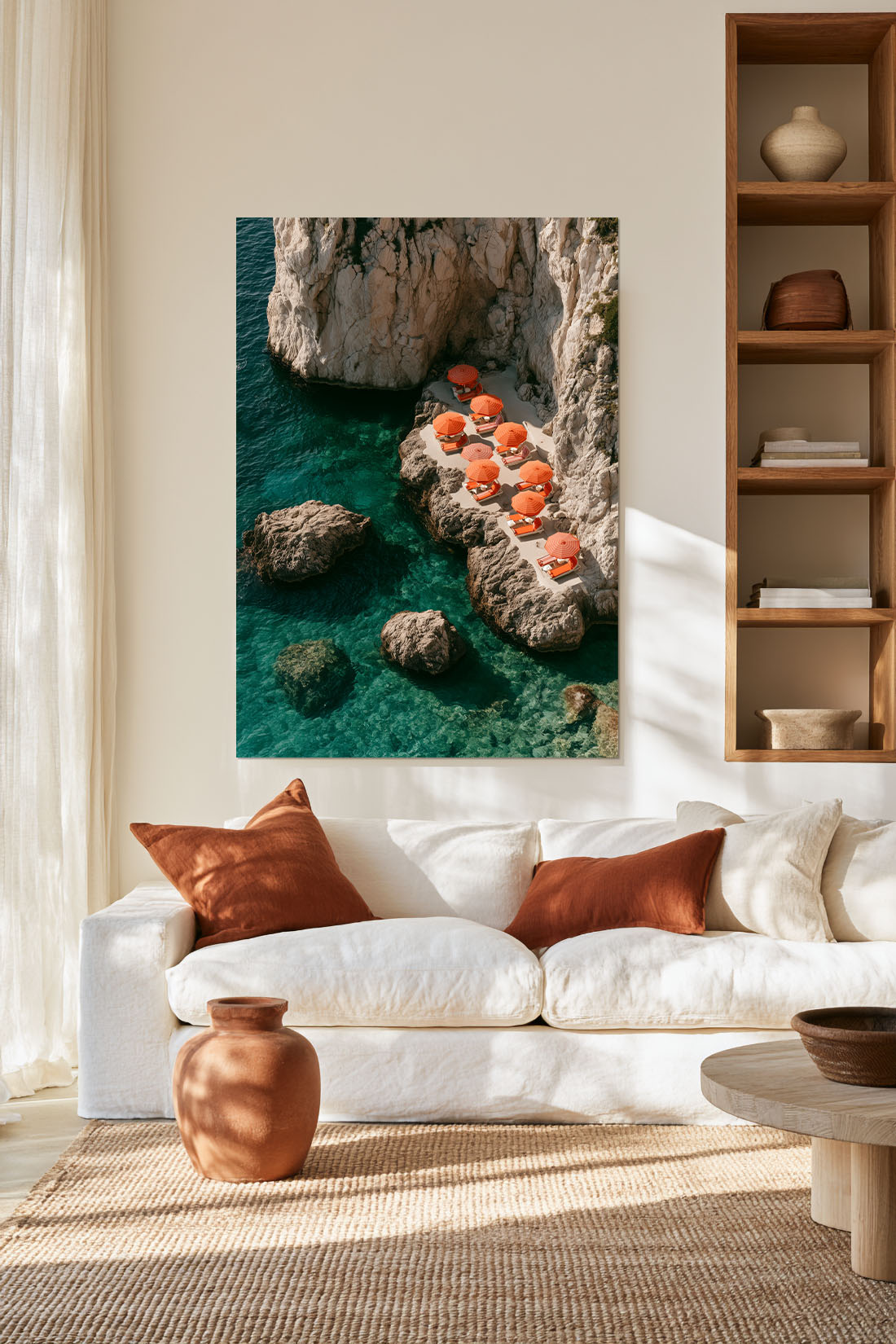
Gallery Walls: When One Print Isn’t Enough
A curated gallery wall above the sofa works — but only when it feels considered rather than accumulated. The difference is restraint.
Prints that work here: the Aerial Infinity Pool and Sunbeds Framed Print, the Calanque Anchorage Framed Print and the Porsche 356 and Lavender Fields Framed Print — each available as a framed print, ready to hang. Browse the Mediterranean Mood collection for more.
The most coherent approach: choose a consistent format or finish, a limited palette, and a clear outer boundary. A tight grid of four prints (two rows of two) reads more confidently than an asymmetric spread of eight frames in different sizes.
If you want variety, unify through colour rather than size. Three prints in different dimensions but the same tonal range — warm neutrals, deep charcoals, or Mediterranean blues — hold together without looking forced.
One rule worth keeping: leave enough breathing room between frames. 4–6 cm between pieces is enough to separate them; more than 10 cm and the composition starts to fragment.
Framed vs. Unframed: Which Finish Reads Better?
A frame does two things: it protects the print and it adds visual weight. For a sofa wall, that weight is usually an asset — a framed piece has presence that an unframed print often lacks from across a room.
The frame style should stay consistent with the room’s register. Black frames suit contemporary, pared-back interiors. Natural wood reads warm and relaxed. Thin gold or brass frames work in elevated, detail-forward spaces.
If the room already has strong architectural character — exposed stone, dark joinery, bold tiles — an unframed print on a floating mount can be the right call. It sits quietly without competing.
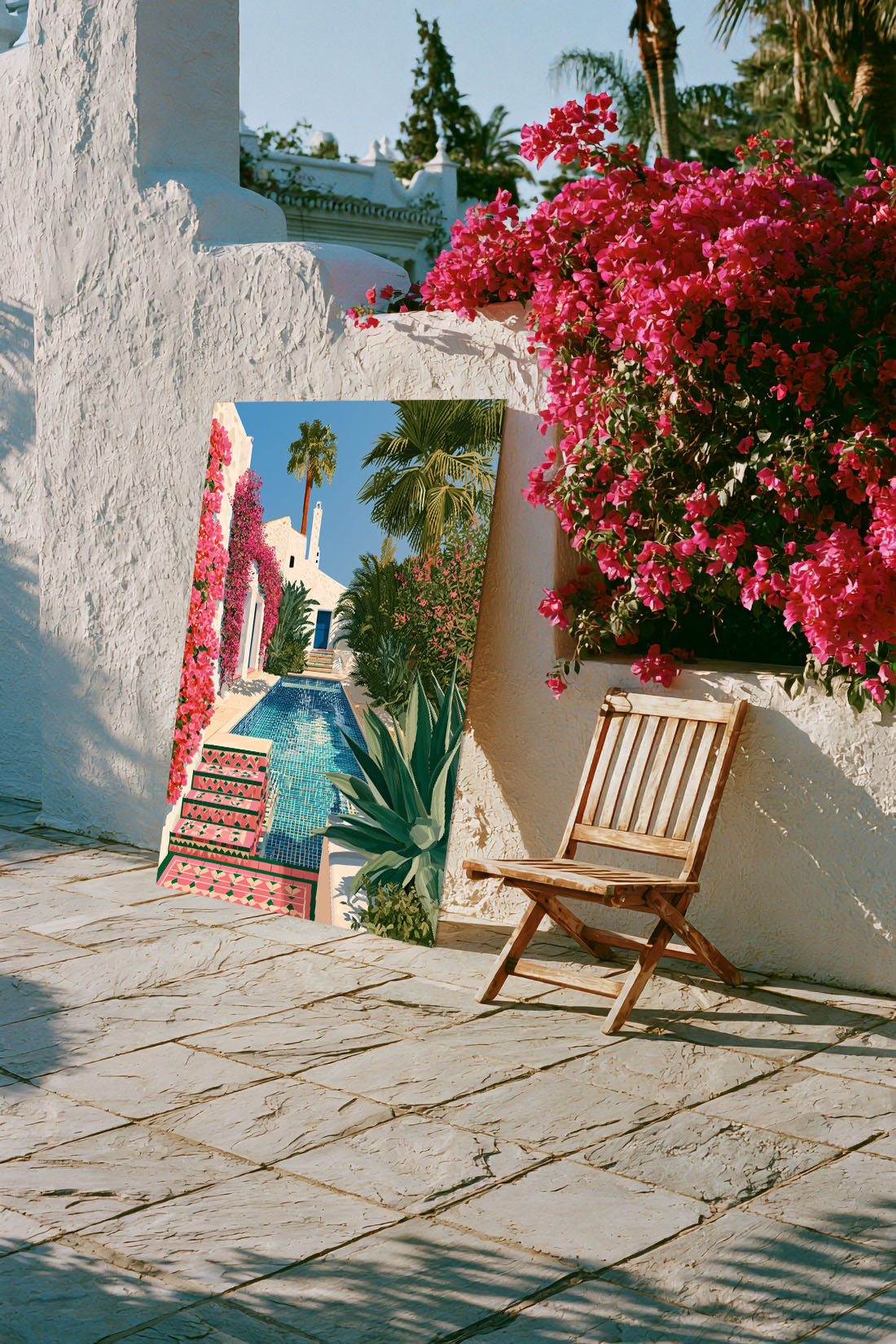
What Actually Works by Interior Style
Mediterranean and warm-toned rooms: Coastal prints, sun-bleached landscapes, botanical studies in terracotta or olive. Avoid anything too cool or industrial — it fights the warmth.
Neutral and minimalist spaces: A single large abstract or architectural study. High contrast, simple palette. Let the print carry all the personality the room withholds elsewhere.
Maximalist or eclectic rooms: A gallery wall is your friend here, but exercise real curation. Stick to one dominant subject — travel, figurative work, or animals — and let that throughline hold the composition together.
Dark-painted or panelled rooms: Lighter prints — creams, soft whites, warm pastels — create contrast and prevent the wall from feeling heavy. Avoid dark prints on dark walls unless the contrast is extreme.
The One Piece Worth Centring On
If you’re choosing a single print for above the sofa, the best subject is usually the one that says something specific about how you live — not just something decorative.
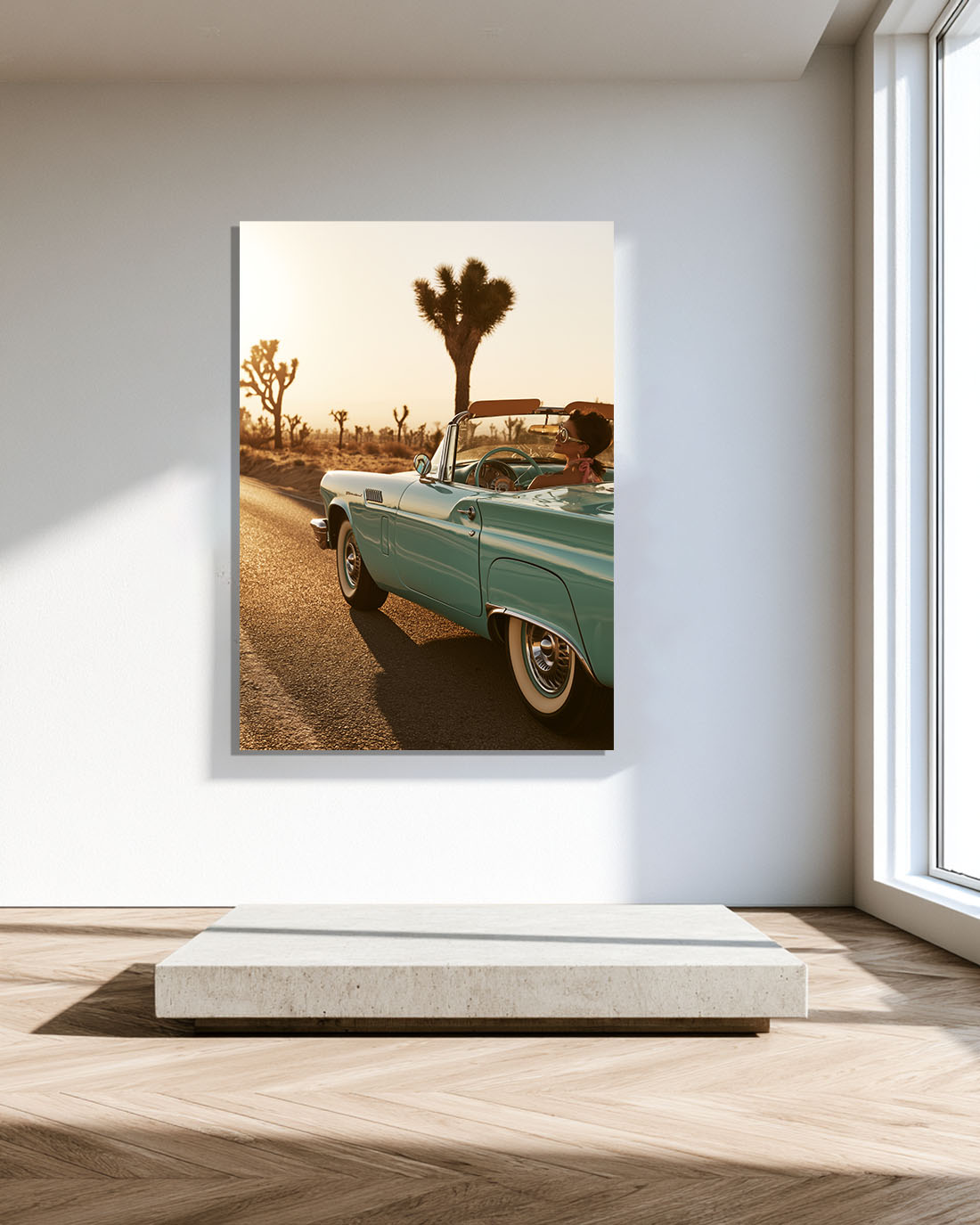
A well-chosen piece makes the room personal. A print of a Porsche on a mountain road, a close-up of a Mediterranean facade, an animal study that references a place you’ve been — these are conversations, not just compositions.
That specificity is what separates a collected space from a decorated one. The best sofa walls look like they took years to build, even when they didn’t.
Common Mistakes (And How to Fix Them)
Too small: Measure first. If you can’t go larger, use a grouping to fill the horizontal space.
Too high: Anchor the art to the sofa back. The visual relationship between the furniture and the wall piece is what makes the composition read correctly.
Too literal: A seascape print in a coastal home can work beautifully — but it can also read like a hotel room. Add something unexpected alongside it.
All the same size: In a gallery wall, one dominant piece with smaller works orbiting it creates hierarchy. Equal sizing creates monotony.
→ Explore statement art prints for the sofa wall — from oversized Mediterranean landscapes to bold animal studies, framed and ready to hang.
Read Also:
Gallery Wall Ideas 2026: Beyond the Basic Grid
Art Print Size Guide: How to Choose the Right Format