
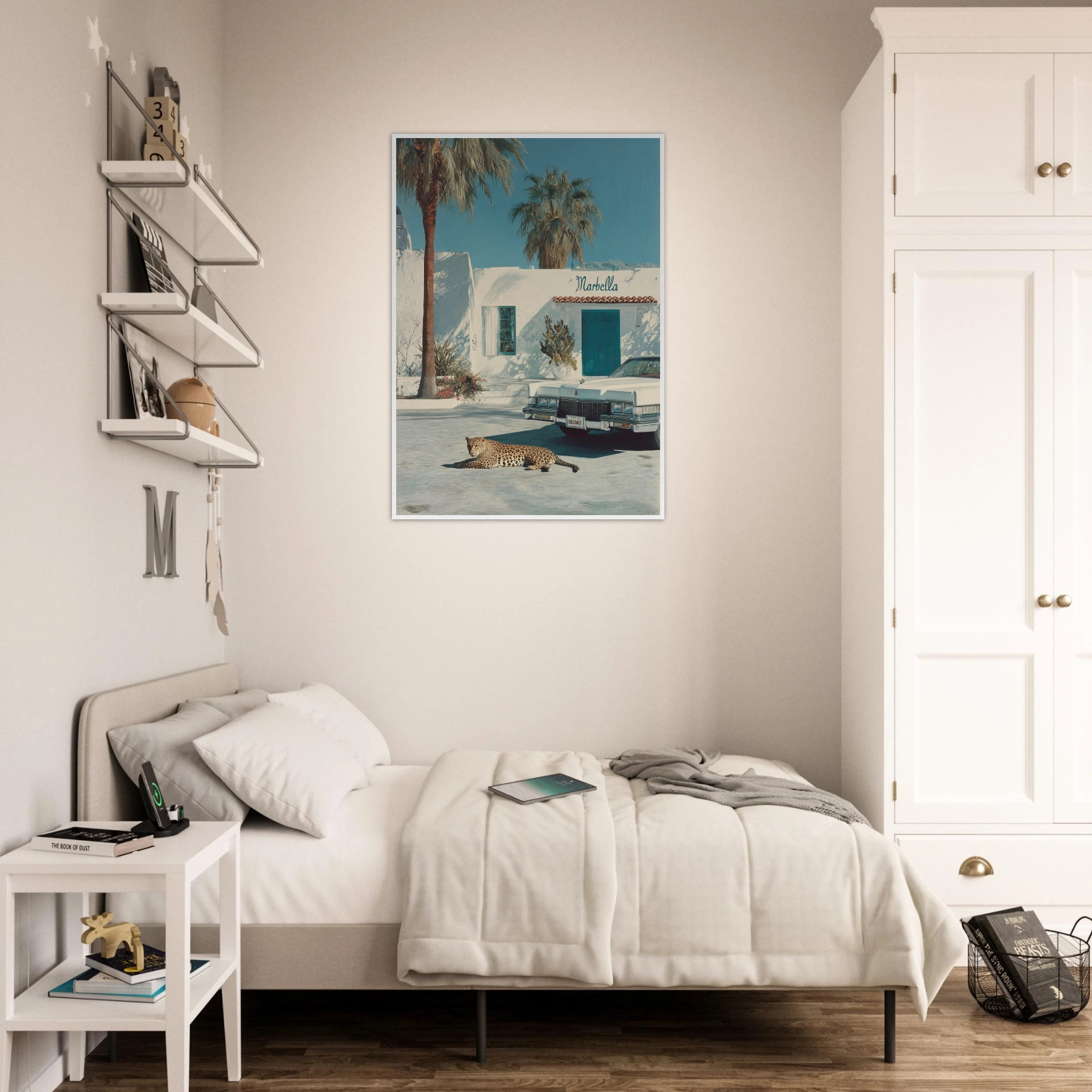
Dopamine decor wall art is the antidote to the beige decade. After ten years of quiet luxury and greige walls, interiors are turning back toward colour — not the loud, random kind, but colour that is chosen on purpose, the way a stylist chooses an outfit. A single striking print can do more for a room’s mood than any cushion.
What Dopamine Decor Actually Means
Walk into a room styled this way and the effect is immediate — you notice the art before you notice anything else, and it puts you in a better mood before you have worked out why. That is the whole point.
The term comes from fashion — “dopamine dressing,” clothes worn purely because they make you happy — and it has moved straight into the home. Dopamine decor is not maximalism for its own sake. It is a room built around a handful of pieces that genuinely lift your mood: a leopard print, a citrus-bright still life, a portrait with too much personality to be called subtle. The trick is restraint everywhere else, so the colour has somewhere to land.
Why Now — The 2026 Shift
Trend forecasters have been calling it “curated abundance”: rich colour, pattern and personality, but arranged with the same discipline that made quiet luxury feel expensive. It pairs naturally with the Mediterranean palette Atelier Marbella has always worked in — Kodachrome pinks, bougainvillea, citrus, gold hour light — which means the shift toward dopamine decor is less a pivot for us than a name finally catching up to the work.
Colour Without Chaos — How to Curate, Not Clutter
The rooms that get dopamine decor right share a rule: one hero colour moment per wall, not five competing for attention. Pick a single large-format print in a saturated palette, let the walls and furniture stay calm, and allow the art to be the loudest thing in the room. A framed leopard-and-Cadillac scene works precisely because everything around it — white walls, natural wood, linen upholstery — steps back and lets it perform.
The Pieces That Do the Work
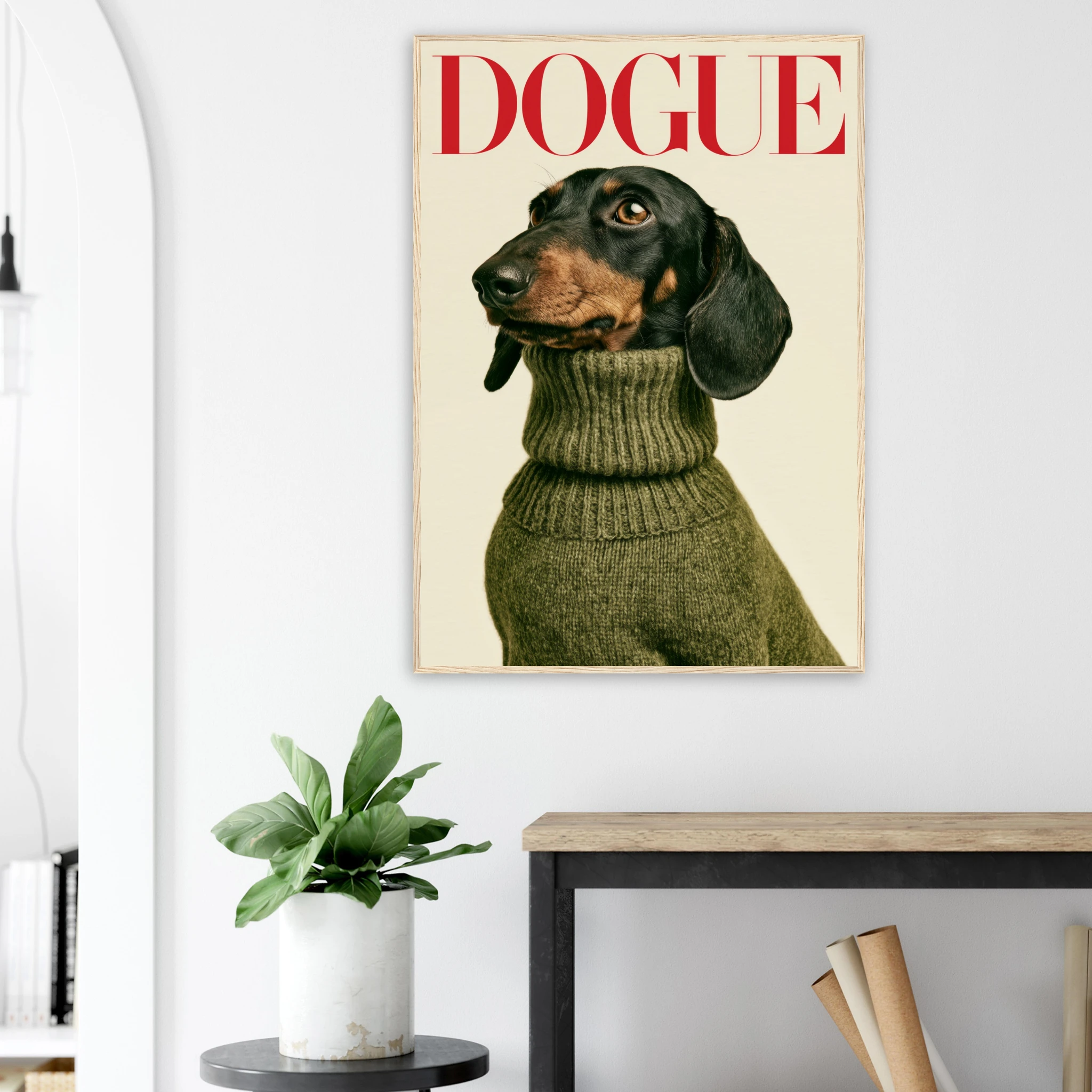
Some artworks are built for this job. Animal prints in saturated colour, vintage fashion scenes with a wink of irony, anything shot or painted like a memory of a better summer — these are the pieces that make a dopamine wall work rather than just look busy. The Dachshund Dogue Black Fire print is a good example: a single joyful subject, styled with enough fashion-magazine irony that it never reads as twee.
Building a Dopamine Wall, Room by Room
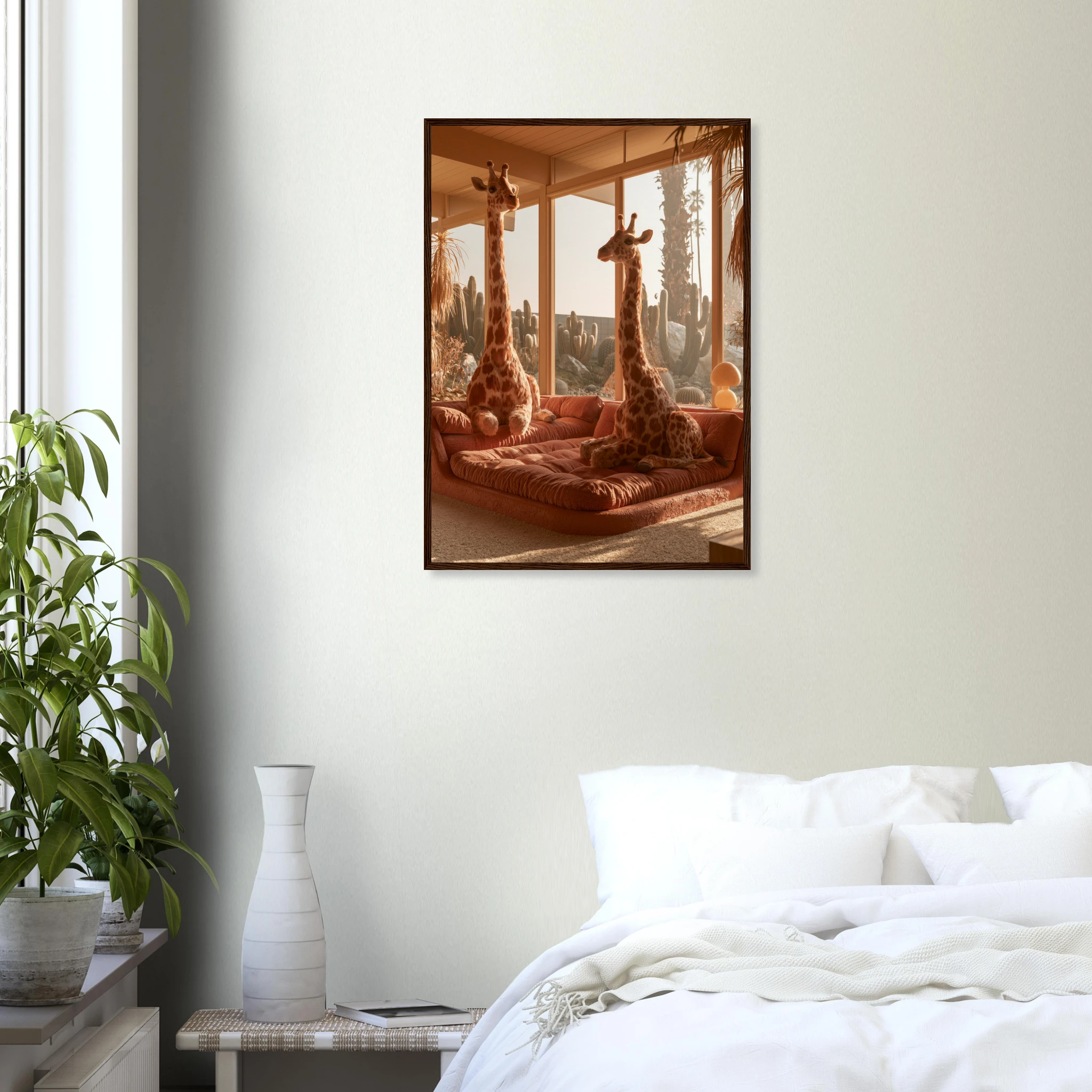
In a living room, the dopamine piece earns its own wall — ideally the one you see first from the sofa, not a side wall competing with a window. In a hallway or entryway, one bold framed print does more than a gallery wall of six small ones; dopamine decor is about impact, not density. In a bedroom, keep it to a single accent wall so the colour energises rather than keeps you up. Giraffes and warm gold tones, like in Giraffes in the Golden Lounge, work particularly well in reading corners and studies — playful enough to lift the mood, warm enough not to overstimulate a space meant for focus.
Dopamine Decor in the Kitchen and Dining Room
The kitchen is where this style earns its keep fastest. A single saturated still life above a sideboard or breakfast nook does what a whole wall of open shelving used to do — it gives the room a personality without adding clutter. Because kitchens already carry a lot of visual noise (appliances, cabinetry, worktop texture), one confident print reads as intentional rather than busy, provided the rest of the room stays restrained.
Pairing Colour With Your Existing Palette
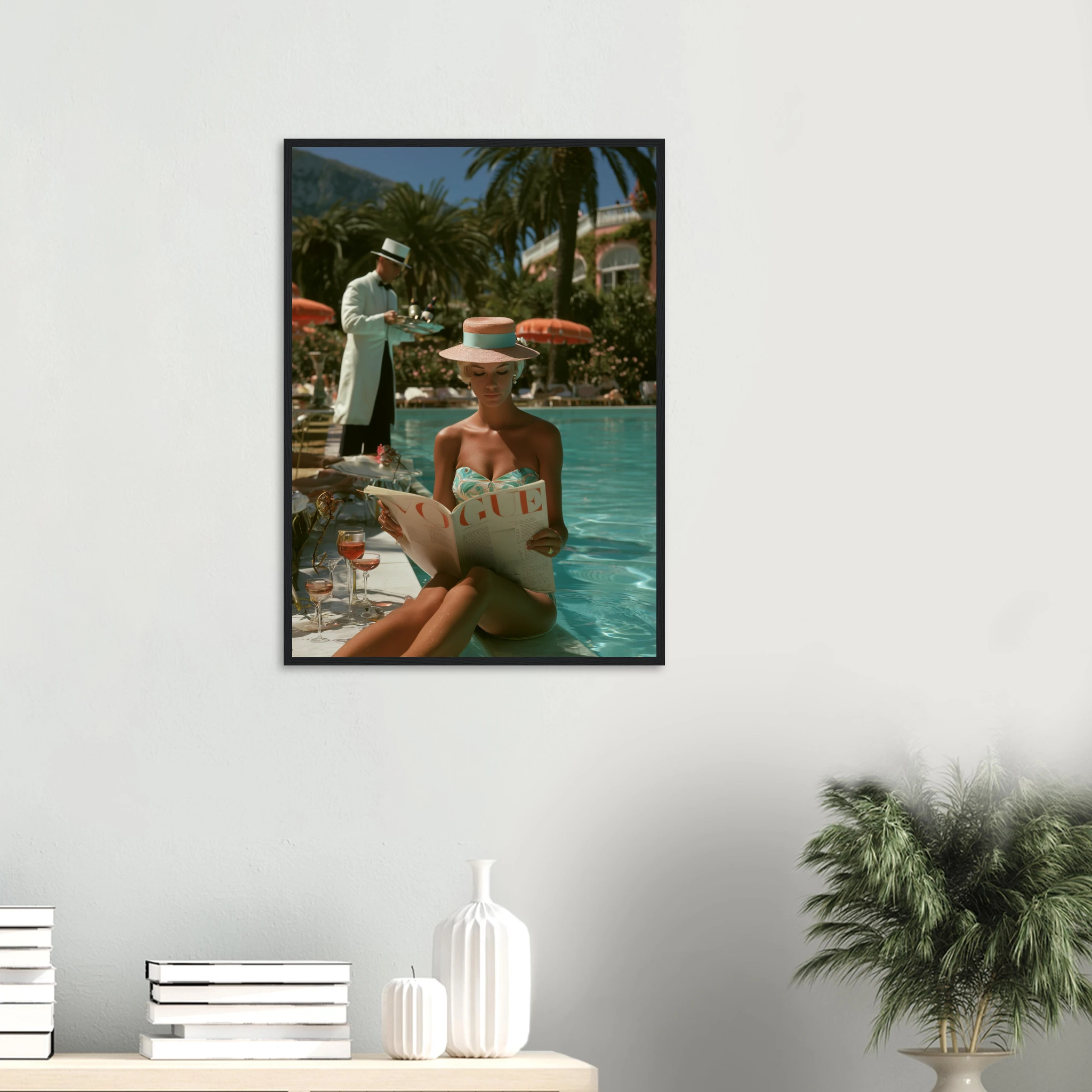
You do not need to repaint to try this. Dopamine decor works best against a neutral base — white, sand, warm grey — precisely because the art is doing the colour work the walls used to do. Vintage fashion and poolside scenes, like Fashion Lady Vogue Pool Vintage, sit particularly well in rooms with a lot of natural wood or rattan — the warmth of the materials keeps the saturated print from feeling cold or purely graphic. Browse the full Animals collection for more pieces built around a single confident colour story.
A Note on Framing
Because the print is carrying the room, the frame should not compete. A black or dark wood frame gives a saturated print a clean edge without adding another colour to negotiate; a white frame works if the wall behind it is already dark. Whatever the choice, ship the piece framed rather than adding a frame later — the proportions of a dopamine piece are usually part of the composition, and a mismatched frame undercuts exactly the confidence the style depends on.
Read Also
For the trend context behind this piece, see Wall Art Trends 2026: What’s Actually Worth Buying. If quiet luxury is more your register, Old Money Aesthetic Wall Art covers the opposite end of the spectrum. And for how to anchor any of these choices in your main room, Living Room Wall Art has the full placement guide. For a maximalist motif in the same spirit, see Peacock Wall Art: From Toile de Jouy to Modern Prints. For a full walkthrough on building a dense, curated wall, see Maximalist Gallery Wall: Curated Abundance Without the Chaos. Also see Palm Springs Aesthetic Wall Art.
FAQ — Dopamine Decor Wall Art
What is dopamine decor?
Dopamine decor is an interior approach built around a small number of colourful, high-personality pieces — chosen because they make you happy to look at, not because they match a scheme. It borrows the idea from “dopamine dressing” in fashion.
Is dopamine decor the same as maximalism?
Not quite. Maximalism layers pattern and colour everywhere; dopamine decor is more curated — usually one confident colour statement per room, set against a calm, neutral base so it has room to stand out.
How do I try dopamine decor without repainting?
Start with one large-format framed print in a saturated palette on your most-seen wall. Keep the furniture and walls neutral. The art does the colour work that repainting used to do, and it is far easier to change your mind about later.
What frame works best for a bold, colourful print?
Black or dark wood frames give saturated prints a clean, confident edge without adding a competing colour. White frames work well when the wall itself is already dark or saturated.